Long Term RV Rental as Temporary Housing: How It Works and What to Watch
By Teresa Ocampo · October 21, 2026

I’ve watched a family of four pick up a 32-foot Class C three days after a kitchen fire gutted their house. The mom’s insurance adjuster was still “reviewing the file,” so she slapped down her credit card and said, “We’ll sleep in the driveway tonight and argue later.” I’ve said it before and I’ll say it again: long term RV rental usually isn’t a vacation, not like travel trailer rentals in Phoenix. It’s an emergency, a job site, a remodel that ran three months long. And the price you end up paying comes down to the questions you ask before you sign anything.
If you’re comparing options and you’re in the Phoenix area, start with travel trailer rentals there, because delivered trailers change the whole math.
Delivered and parked trailers vs drivable units
The first fork in the road is wether you’ll drive it or it’ll be delivered and parked.
Drivable units, a Class C, Class B, or Class A, make sense if you need to move between job sites, or you want the option to take off on weekends. Most long-term rentals I handled had mileage packages: a set number of miles per month, then a per-mile fee that varies by company, often in the $0.35 to $0.50 range. If you’re not moving the rig, that’s money you could put toward a nicer parked trailer.
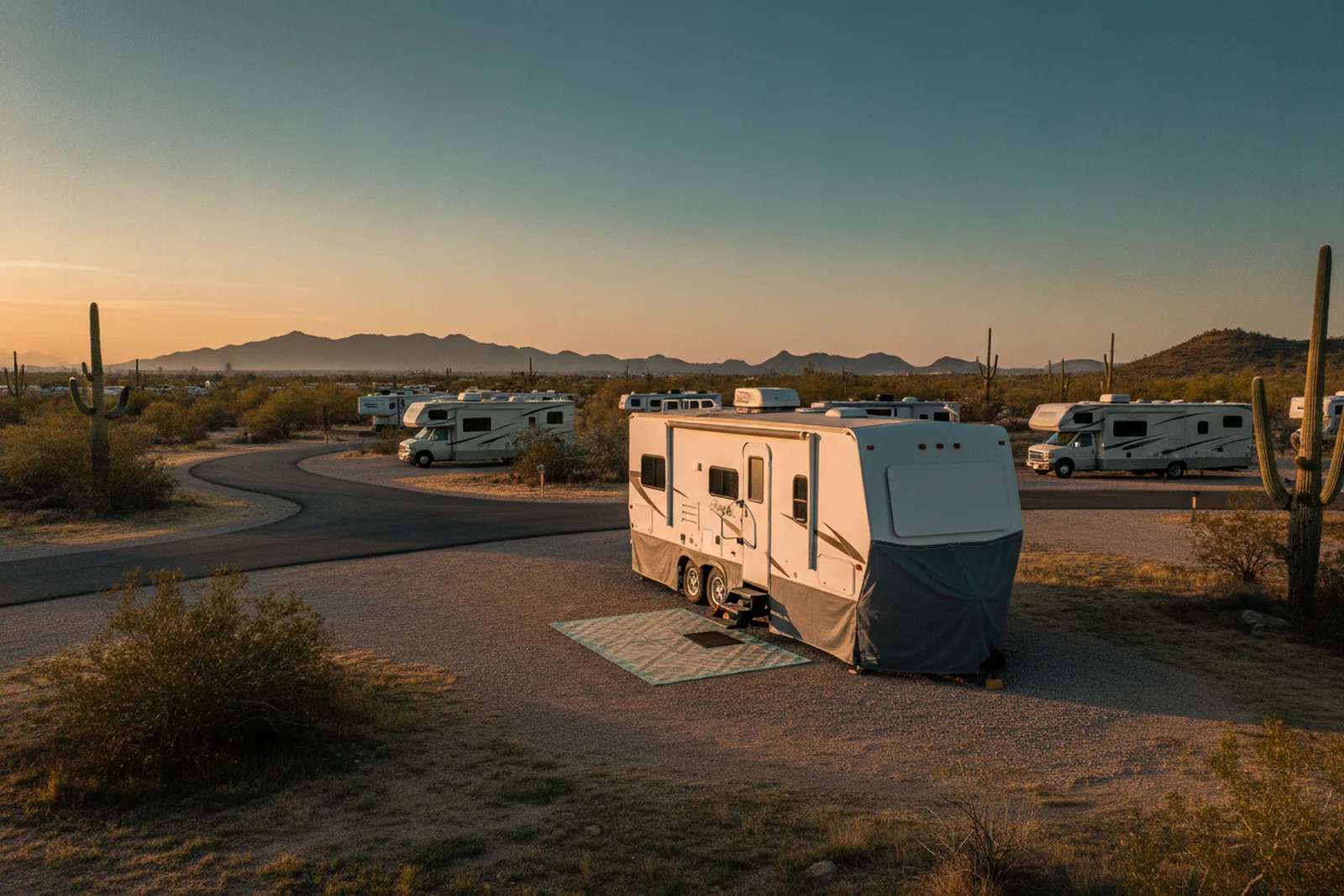
For delivered trailers, ask about the delivery fee, setup, and who handles dump station runs. Some owners charge $150 to $300 each way depending on distance. That’s money well spent if your living in it and not driving it.
Monthly long term RV rental rates vs vacation rates
Vacation rentals run on nightly rates. Long-term rentals are a different beast.
Here’s a rough table of monthly ranges I’ve seen for three common types:
| RV Type | Monthly Rate (ballpark) |
|---|---|
| Class B camper van | $2,700 to $5,100 |
| Class C motorhome | $3,300 to $6,000 |
| Class A motorhome | $5,400 to $10,500+ |
These are rough ballparks from one camper van company’s published ranges, and they vary by season, location, and age of the rig. A 2018 Class C in Phoenix in August might go for $3,000, while the same floorplan in Denver in July could fetch $4,200.
Our post on monthly RV rental walks through the rate math for a month on the road, including mileage and generator calculations that apply here too.
Where it can legally sit: RV parks, your own property, and job sites
This is where long-term rentals go sideways.
Living in an RV on your own property is a whole different animal. Local zoning and HOA rules decide. In my county in Nevada, you can park an RV on your land but not live in it, unless it’s during a declared emergency, and even then you need a temporary permit. Some HOAs ban RVs entirely, even in the driveway, this is the number one reason I’ve seen long-term rentals returned early.
Job sites are usualy more flexible, but you still need sewer and power. A generator running 24/7 will kill your budget and your sleep. Ask about shore power and a sewer dump schedual before you commit.
Utilities, propane, sewer and winter freeze issues
Your RV is a tiny house with two glaring weaknesses: propane and water.
If you’ll be in freezing weather, you need heat on at all times, skirting around the base, or a heated water hose. For propane, many RVs burn through a 20-pound tank every 3 to 5 days when the furnace runs, but usage varies by rig and weather. Propane refills can cost $20 to $50, and you’ll need to know who refills them, you or the owner.
Sewer is the other headache. A full black tank means a trip to the dump station, or a honey wagon service if you’re parked long-term. Some RV parks include a pump-out service for $25 to $50 a week. If you’re on a job site, you may need a portable waste tote. Ask whose job that is and get it in writing.
I found a video from an RV tech that walks through the best floorplans for staying put for months, worth a watch before you pick a rig.
Insurance-paid additional living expense situations
A big chunk of long-term RV rentals are paid by homeowners insurance after a fire, flood, or hurricane.
Here’s what I tell renters who are waiting on an adjuster: get the insurance company to approve the RV rental in writing before you book. You can pay the rental yourself and submit receipts for reimbursement, but confirm that the insurer will reimburse you for an RV specifically. Some adjusters are fine with it; others want a hotel or a ‘like kind’ living situation.
The adjuster may also want a copy of the rental agreement, the owner’s insurance, and a letter from the rental company stating the monthly rate and what’s included. Get all that in one email thread. And keep your receipts for propane, dump fees, and any hookup costs; those may be reimbursable too.
Maintenance responsibilities in the agreement
Rental agreements are not friendly to renters who don’t read the maintenance section.
Read the agreement line by line. Ask: Who pays for routine maintenance? Who pays if the fridge dies at week three? What about a flat tire, does roadside assistance cover it, or do you pay the tow? What happens if the furnace stops working in January, does the owner send a tech, or do you find one?
A good long-term rental agreement will have a clear split: the owner covers structural and appliance failures, the renter covers consumables like propane, DEF fluid, and wiper blades, and routine maintenance is either spelled out or excluded. If it’s not, that’s a money pit.
For a broader look at travel trailer rentals nationwide, including owner expectations on maintenance, start with that page and compare three or four local companies before you commit.
Questions to ask before you sign a multi-month rental
These are the questions I wish every long-term renter had asked me at the counter.
- What’s the monthly rate and does it include a set number of generator hours? If not, what’s the per-hour fee after the included amount?
- How many miles are included per month, and what’s the per-mile fee after that?
- Where exactly will the RV sit? Get the address, and verify local zoning and HOA rules yourself.
- Who handles sewer dumps and propane refills, and what does that cost?
- What happens if something breaks, fridge, furnace, water heater? What’s the maximum response time for repairs?
- Can I see a copy of the rental agreement before I pay the deposit?
- What’s the cancellation policy if my house is ready earlier than expected?
If the owner or company can’t answer those in writing, you’re looking at a risky rental. And if you’re in a bind and need something fast, our guide to last minute RV rental has some hard-won lessons from a four-day scramble.

The $4,800 freeze I still think about
I’ll be honest: I’d rather rent a delivered trailer for long-term housing than a drivable rig, almost every time. But only if you can park it legally and keep it from freezing. I’d also insist on a written clause that the owner handles all appliance repairs within 48 hours.
Here’s a test you can do this weekend: pull up RV rental companies near you, pick two or three that deliver, and ask them for a written quote on the same dates and same size trailer. Ask for every fee line by line: monthly rate, delivery, setup, dump service, propane, cleaning, anything else. Then compare the total, not the nightly rate. That’s the number that will keep you from walking into a $4,800 freeze disaster.
Before you book
FAQ
What does a long term RV rental typically cost per month?
Monthly rates range from about $2,700 for a Class B camper van to over $10,500 for a large Class A motorhome. Class C rigs usually run $3,300 to $6,000. These are rough ballparks; season, location, age, and included miles all move the number. Always ask for a monthly quote with all fees itemized, not just the nightly rate times 30.
Can I live in an RV on my own property while my house is remodeled?
Local zoning and HOA rules decide. Some counties allow temporary RV living on your land during construction or after a disaster, often with a permit and a time limit. Others ban it outright. HOAs can be stricter than the county. Check with your local planning department and HOA before you book the RV.
Will my homeowners insurance pay for an RV rental after a house fire?
Many policies include additional living expenses (ALE) that may cover temporary housing costs above your normal living expenses, and an RV may qualify in some cases, but check with your insurer. But every policy differs, and adjusters want prior approval. Get written confirmation that an RV rental qualifies, and keep all receipts for reimbursement.
How do I keep a parked RV from freezing in winter?
Keep the interior heated at all times, close curtains and cabinet doors, and use a heated water hose if connected to city water. Skirting around the base helps, and you may need to add RV antifreeze to holding tanks if the temperature drops below 20°F for more than a few hours. Ask the owner for thier specific freeze protocol and follow it exactly.
Is a delivered travel trailer better than a drivable motorhome for long-term housing?
Usually yes, if you don't need to move it. A delivered trailer skips mileage fees, fuel costs, and tow vehicle requirements. The owner handles setup, leveling, and often sewer dumps. You'll pay a delivery fee, typically $150 to $300 each way, but you save on operating costs and wear items. Compare total monthly cost with a drivable unit before deciding.
What maintenance am I responsible for in a long-term RV rental?
It varies wildly by rental agreement. Some owners handle all repairs and routine service; others put oil changes, generator service, and tire fixes on the renter. Read the agreement carefully. Ask who pays for breakdowns, appliance failures, and consumables like propane and DEF fluid. Get the maintenance split in writing before you sign.
Can I get a refund if I return a long-term RV rental early?
Most long-term rentals have strict cancellation and early return policies. Many charge a penalty, and some keep the entire month's payment if you return befor the agreed date. Private owners may be more flexible if they can rebook, but don't count on it. Ask about early termination before you pay, and get any agreed refund terms in writing.
Find RV rentals near you
Compare RV rental companies in your city, then ask a few for a quote on your dates.
Browse by stateOr jump to: Tampa, FL · Denver, CO · Los Angeles, CA