Small RV Rental: What a Small Rig Gets You, Vans to Trailers
By Bryce Nakamura · October 21, 2026
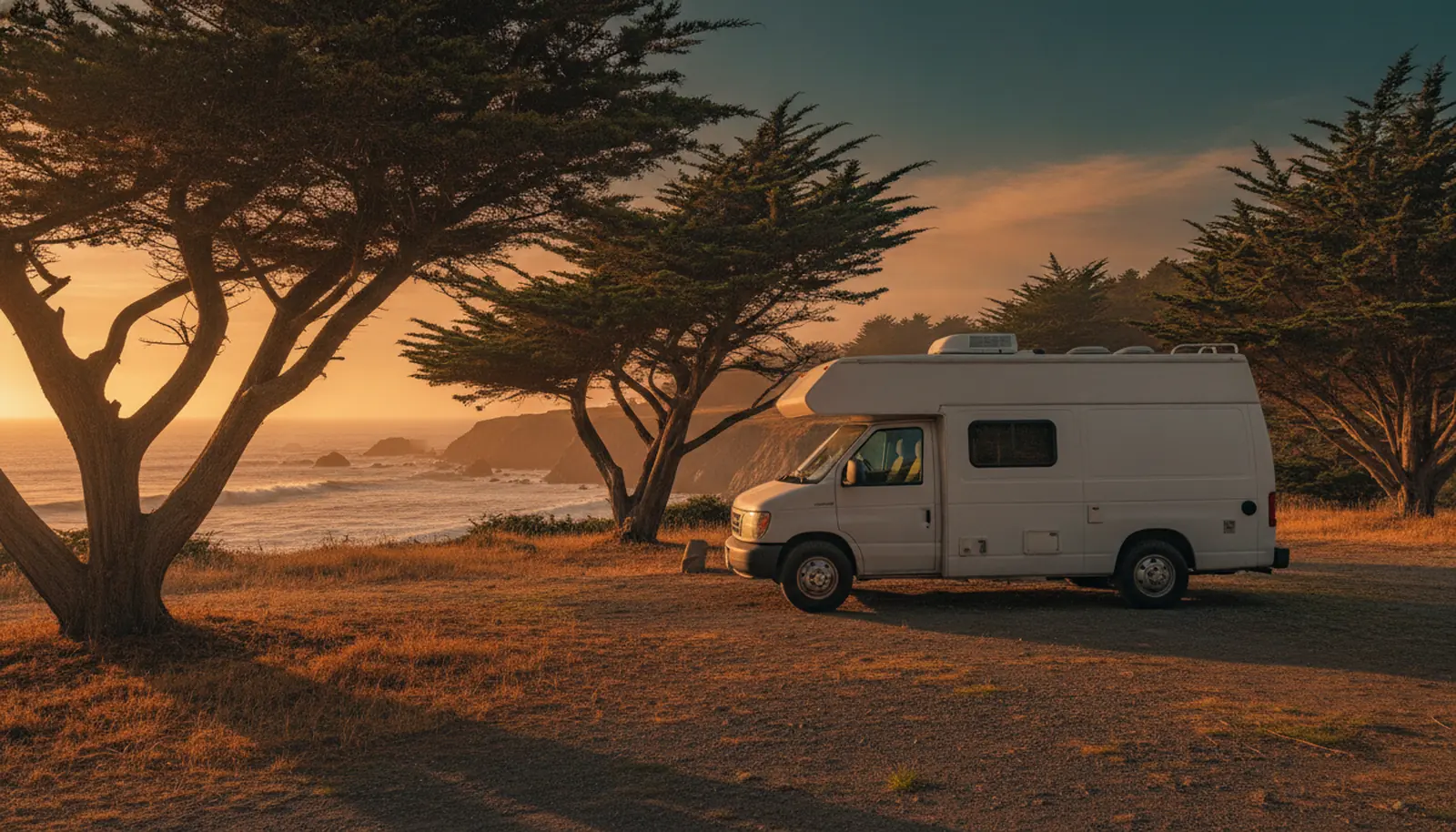
Last June I watched a couple unfold a printed campsite reservation right in my driveway. They’d booked a site next to Glacier with a hard 24-foot limit, which is why they were standing in front of my 20-foot van instead of picking up some Class C, a choice many camper van rentals in Los Angeles make for tight campgrounds. $228 a night, and the spot they got, a bigger rig could not fit into. Meanwhile a buddy of mine took a rented teardrop down to Big Sur for a long weekend. Came back sunburned, sore, and still grinning. So small RV rental realy comes down to four types: camper vans, compact Class C units, teardrops or small travel trailers, and truck campers. Each one is exactly right somewhere and exactly wrong somewhere else.
When you’re comparing camper van rentals in Los Angeles or wherever you live, look at two numbers first: length and what the bathroom setup is. The rest follows from there.
Camper vans: the small RV you park like a car
A Class B camper van generaly comes in at 17 to 22 feet, sleeps two, maybe three if there’s a pop-top, and it slots into a normal grocery store parking space. My 2021 van is 20 feet and I have lost count of the texts from renters in a downtown parking garage that a 30-foot Class C would never have cleared. You’re usually dealing with a wet bath or cassette toilet, a small galley, and a bed that either folds or stays put. Fleet vans from the big companies run maybe $100 to $250 a night. Private owners like me tend to land around $200 to $240 once extras go on.
What do you give up? Rain. Two grown adults stuck inside 20 feet during a wet Oregon afternoon means one person on the bed while the other tries to cook.
Camper vans win in cities, on mountain roads, and at campgrounds with posted length limits. They lose for families and multi-week trips, which is when people start looking at something with real beds at both ends.
Compact Class C: a hallway with beds at both ends
Compact Class C rigs run 22 to 27 feet and sit on a van or small truck chassis with that bunk over the cab. You get an actual bed in the back, a dinette that turns into another bed, and often a corner bathroom with a shower. Sleeps four to six. The big rental fleets charge about $150 to $300 a night, and it’s the unit most families try first. Our guide to Class C RV rental covers what to look over before pulling out of the lot.
The driving part clicks after the first hour. The cab-over wants to grab low tree branches in drive-through lanes, and the rear overhang swings wide when you turn sharp.
These give you headroom, a real fridge, and a bed you don’t have to rebuild every evening. But they aren’t nimble like a van. Park outside downtown in cities like San Francisco or Seattle and take transit in. If you want something cheaper per night and don’t mind towing, the next two types are where your money goes further.
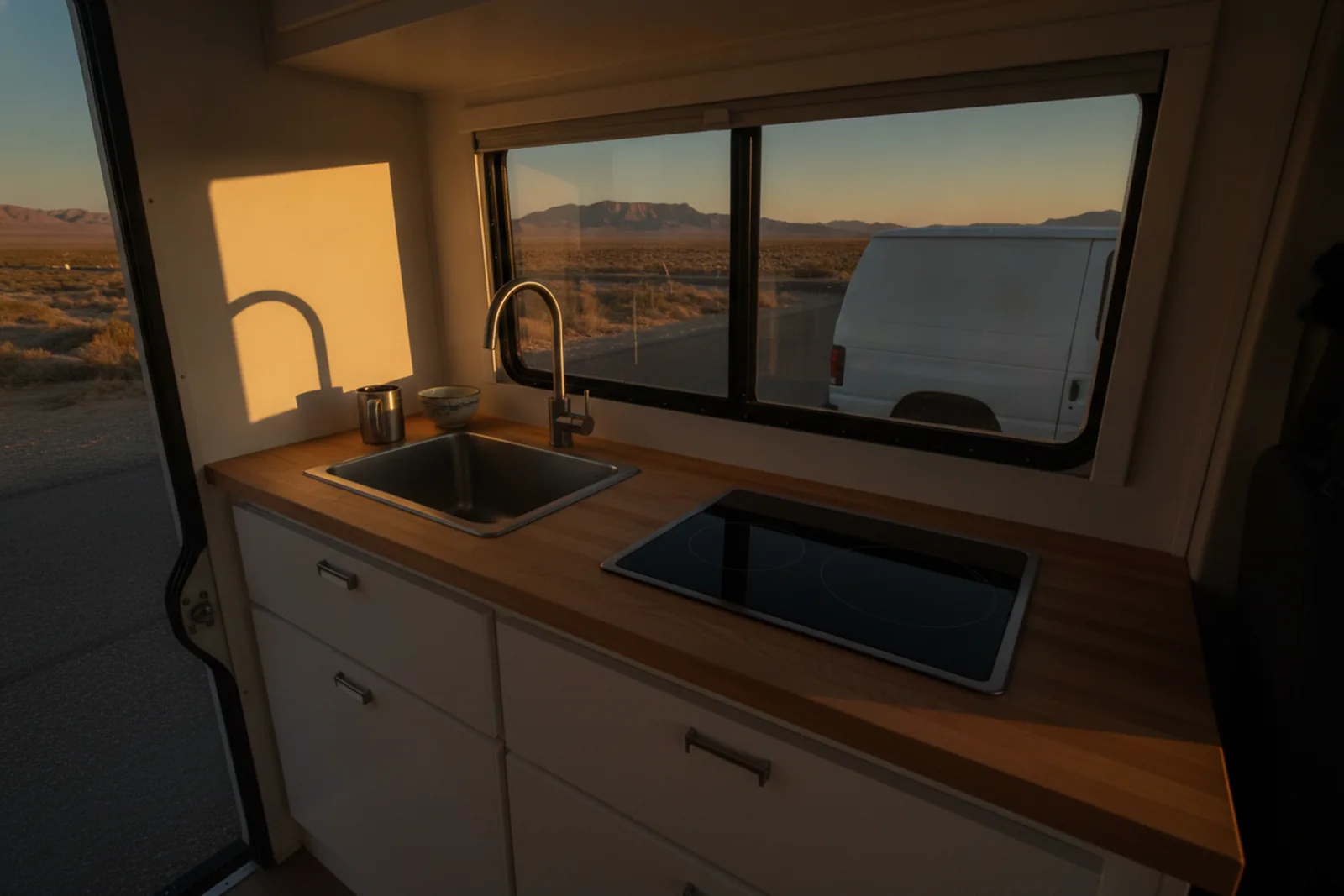
If you’re stuck between a small Class C and a camper van, this video walks through the trade-offs.
Teardrops and compact trailers: small until you add the tow vehicle
A teardrop runs 12 to 18 feet, sleeps two in a bed you crawl into from the rear, and the kitchen is outside under a hatch. Compact travel trailers go 18 to 24 feet and offen add a dinette, a bed, sometimes a wet bath. Small trailers are the cheapest per night, roughly $50 to $150, and you can pay extra for delivery if you don’t want to tow. But you need a tow vehicle that’s actually rated for the loaded weight, and you need to verify the hitch and brake controller before hooking anything up.
My Big Sur friend learned that part the unpleasant way. His crossover’s tow rating was fine on paper, but the brake controller gain was set wrong, and the trailer shoved him around on Highway 1. Small doesn’t automatically mean easy. We go through towing versus delivery in our RV trailer rental post.
Teardrops are great for two people who plan to be outside all day and just want a dry mattress at night. Compact trailers give you standing room and a bathroom but they catch the wind and feel heavy on the highway. If you don’t have a tow vehicle at all, there’s one small RV that skips the trailer question entirely.
Truck campers: a bedroom that lives in the bed
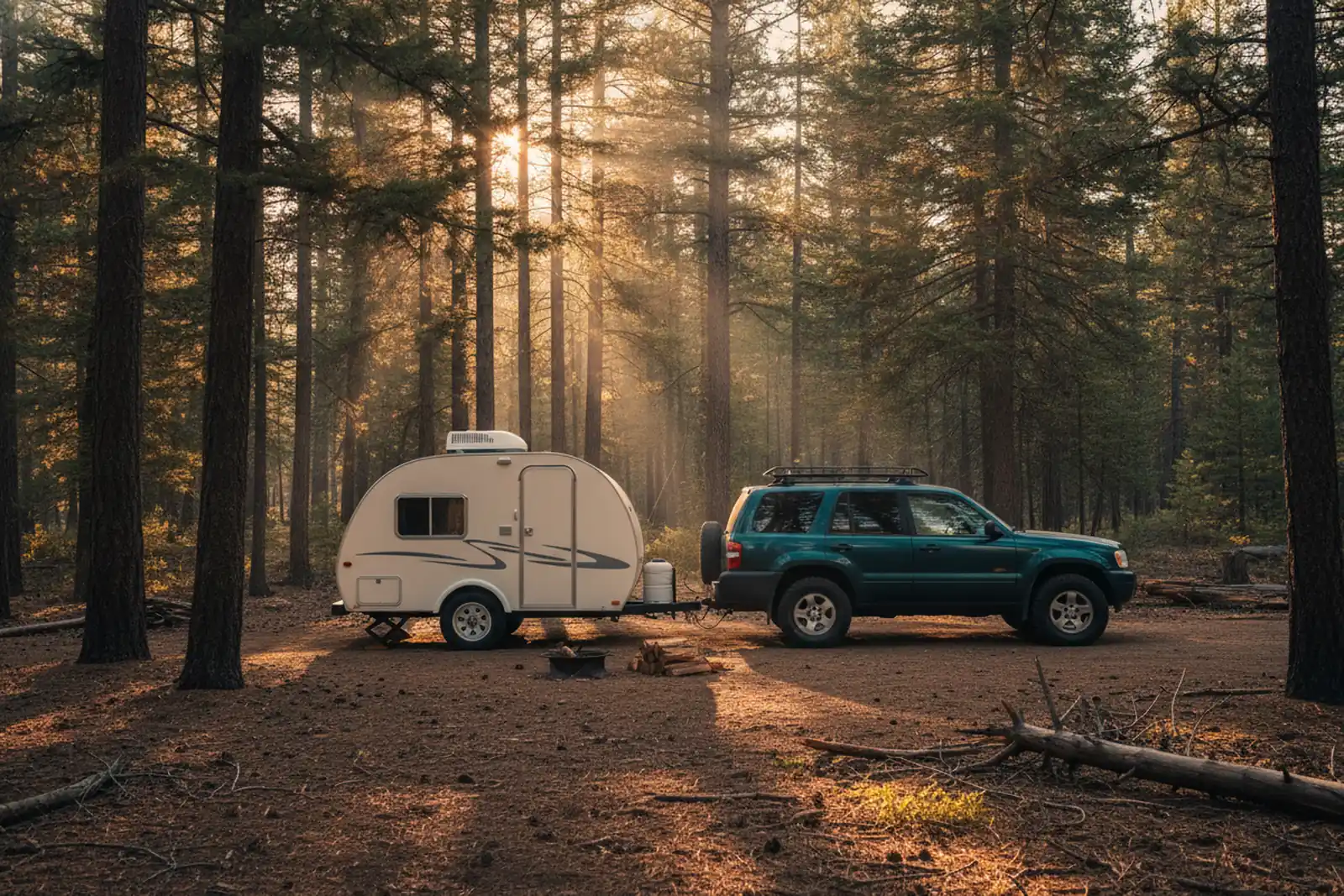
A truck camper sits in the bed of a full-size or heavy-duty pickup. Living space is 16 to 20 feet plus the truck itself, sleeps two to four, and there’s no trailer behind you. You also can’t drop it at camp and drive away, which is exactly what makes it good and bad at the same time. Major rental outfits list truck campers around $150 to $200 a night, and many come with a small kitchen and cassette toilet.
I’ve borrowed a friend’s setup for a music festival. Best part was rolling into a normal parking spot and still having a bed. Worst part was the ladder steps at 2 a.m. After a couple beers, plus the high center of gravity leaning on you through mountain switchbacks.
Truck campers go anywhere a pickup goes, so that means forest roads and beach lots. They lose on interior room and tank capacity. Which brings up the real question: where does small actually beat big?
Where small beats big: national parks, cities, and fuel pumps
The most obvious advantage is length limits. Glacier National Park bans vehicles over 21 feet long or 8 feet wide on Going-to-the-Sun Road between Avalanche Creek and Rising Sun. My 20-foot van squeaks in. Plenty of older state and national park campgrounds cap sites at 25 or 30 feet. A small rig parks in a regular spot, clears low branches, and handles switchbacks without someone jumping out to spot.
Then there’s fuel. My van manages about 17 mpg on the highway. A Class C running 8 to 11 mpg costs roughly twice as much to cover the same miles.
Cities hate big rigs. Garages, narrow streets, urban campgrounds, all of it favors staying under 25 feet. But all that convenience has a cost, and you pay it in square footage.
Where small loses: rain days, families, and day 14
Here’s the part people don’t say out loud. Small RVs feel spacious for a weekend and shrink on day four. Two adults in a camper van during a rainy Oregon coast morning is an elbow war. Three people in a teardrop is impossible.
Bathrooms are the other sore spot. A camper van’s wet bath means the toilet gets soaked every time you shower. A teardrop has no toilet at all.
Long trips reward bigger units. A month in a 20-foot van with two people means a routine for everything: cooking, dressing, sleeping, arguing. Which is why the next section exists.
Small RV rental: the table that cuts the choices
This is my honest comparison from typical rentals and my own time in each type. Prices are broad ranges pulled from fleet and private listings.
| Type | Sleeps | Bathroom | Tow vehicle needed? | Typical length |
|---|---|---|---|---|
| Camper van (Class B) | 2 to 3 | Wet bath or cassette toilet | No | 17 to 22 ft |
| Compact Class C | 4 to 6 | Full or corner bath | No | 22 to 27 ft |
| Teardrop trailer | 2 | None (outhouse or campground) | Yes, small crossover or car | 12 to 18 ft |
| Compact travel trailer | 2 to 4 | Wet bath or full | Yes, mid-size SUV or truck | 16 to 20 ft plus truck |
I have one hard rule: a small RV is only small if you actually fit inside it. Renting a teardrop with a car that’s marginal on tow rating is a great way to spend a vacation staring at the temperature gauge on hills. So before you hand over a deposit, run the test below.
The test I give first-timers
Before you book anything, run the minivan test. Rent a standard minivan for three days and camp with just a cooler, a camp stove, and a port-a-potty. If that feels like too little room, a camper van will too. If it feels fine, a small RV feels like a palace by comparison.
If I was starting over, I’d rent a different small rig for each of three short trips before buying. A teardrop for a coast weekend, a camper van for a national park loop, a compact Class C with kids. Give yourself about nine nights and you’ll know which style fits. Pull up camper van rentals near you, ask each place for a written quote with every fee on the same dates for the same class, and set the totals side by side.
Before you book
FAQ
What counts as a small RV for rental purposes?
Anything under abotu 25 feet, which includes camper vans (Class B), compact Class C motorhomes, teardrop trailers, compact travel trailers, and truck campers. The line is fuzzy becuase some compact Class C units run 27 feet. Check the listing's length and bathroom setup; those two facts determine where you can park and how you'll shower.
Do I need a special license to drive a small RV?
In most US states, no. A regular driver's license covers camper vans, compact Class C motorhomes, and most small trailers, but check your state DMV before booking. A few states require a special class only for very heavy rigs over 26,000 lb GVWR, which small rentals rarely approach, but check your state DMV before booking. Check you're state DMV before booking.
How much do small RV rentals cost per night?
Across recent fleet and private listings, camper vans average about $200 to $250 a night, compact Class C units $180 to $270, and small trailers or teardrops $50 to $150. Nightly rates vary by city, season, and owner. Add-ons like insurance, mileage, kits, and cleaning can raise the real total by alot, so request a full quote.
Can I take a small RV into national park campgrounds?
Usually yes, and that's a big reason renters pick small rigs. Many older campgrounds cap sites at 20 to 30 feet, and some park roads ban vehicles over 21 feet. A camper van or teardrop fits where a Class A never would. Always check the specific campground's lenght limit before you book.
Are small RVs less safe than big motorhomes?
Not inherently. Camper vans are built on solid van chassis with modern airbags and crumple zones, and compact Class C units meet federal motor vehicle safety standards, but always check the specific rig's safety features. The key is to secure all loose items, use seat belts in forward-facing seats, and drive slower on mountain roads. Check that the rental has passed a recent inspection and ask about maintenance records.
What's the biggest mistake people make when renting a small RV?
They underestimate tank capacity and bathroom limitations. A camper van's small fresh tank and wet bath means dumping and wiping down the entire bathroom after every shower. A teardrop has no toilet at all. Plan your water use and dump station stops or book a site with full hookups every other night.
Should I rent a camper van or a compact Class C for a family?
For a family of four, a compact Class C is the better choice. The cab-over bunk and rear bed give real sleeping spaces, and the bathroom is separate from the shower. A camper van works for two adults or a couple with one small child. Rent the smallest rig that fits your worst rainy day inside, not your best weather.
Find RV rentals near you
Compare RV rental companies in your city, then ask a few for a quote on your dates.
Browse by stateOr jump to: Travel trailer rental · Anchorage, AK · Las Vegas, NV · Phoenix, AZ