Monthly RV Rental: The Rate Math for a Month on the Road
By Bryce Nakamura · October 21, 2026
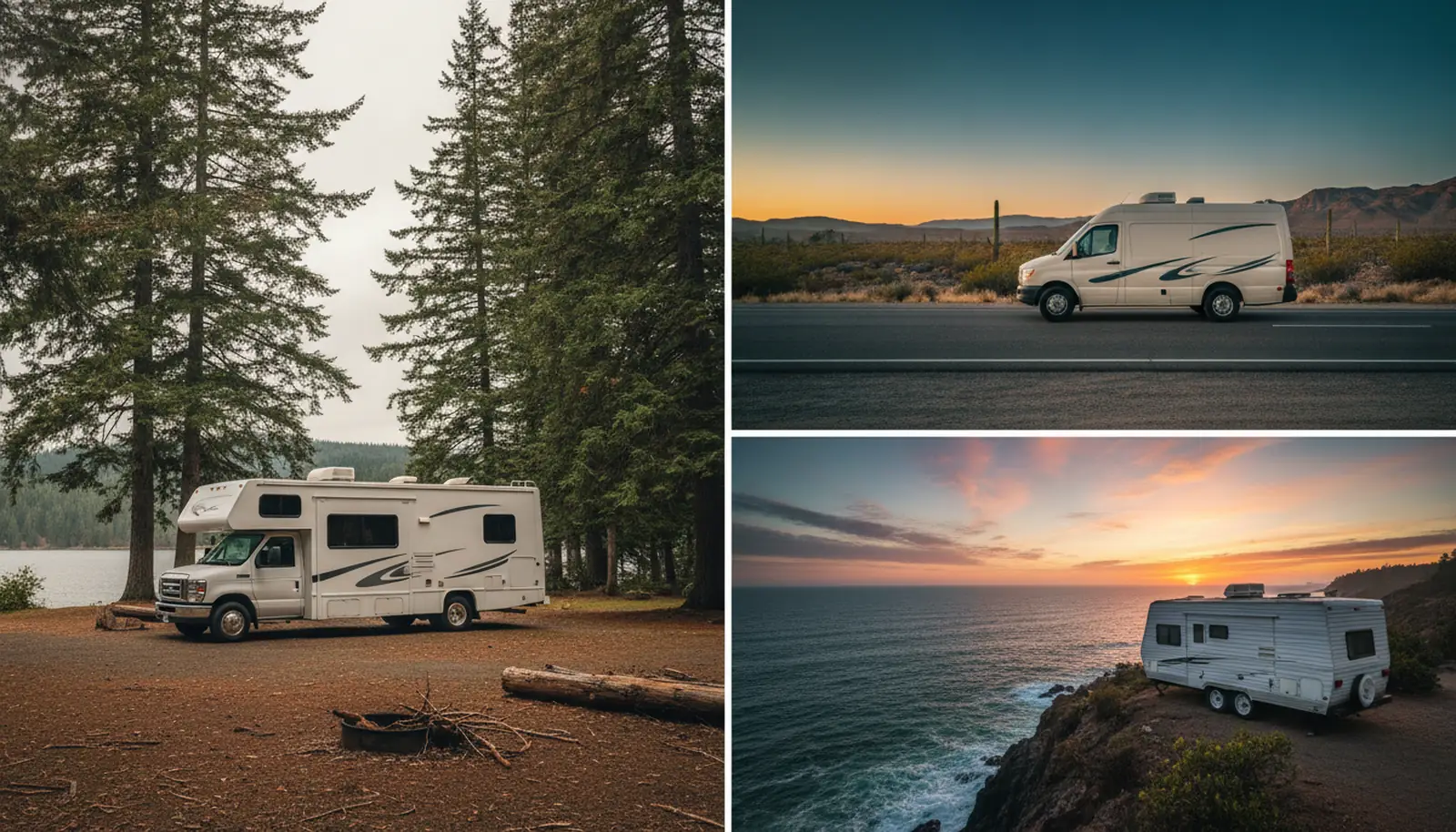
Last March a retired couple from Bend took my 2021 camper van for 31 days. $5,300 all in, which sounded like a lot until I sat down with the nightly numbers. A monthly RV rental can be the cheapest way to do a long trip, but only if you actually read the mileage terms and the maintenance clause before you sign anything. I checked motorhome rentals in Seattle as a comparison and the same month on a Class C was about $6,000 before fees. The couple texted me from Nevada mid-trip about an oil change, and I still think about who should have paid that bill.
Here’s what four seasons of renting out my van has taught me. Long bookings change more than just the price.
Monthly discounts vs nightly math
A 30-night booking often gets a lower nightly rate than a weeklong rental. That’s just how the math works.
Private owners like me set our own monthly numbers. My 20-foot van goes for around $225 a night in July. Book 28 nights or more and I’ll do $150 a night. It’s a trade, sure. I lose some nightly rate, but I also skip eight turnovers, eight cleanings, and eight seperate chances for somebody to scrape a mirror backing out of a campground.
One camper van company publishes monthly ranges of about $2,700 to $5,100 for a Class B and $3,300 to $6,000 for a Class C. Those figures usually include a mileage allowance, so the fine print matters more than the headline rate.
Mileage packages on a 30-night rental
Mileage is where long trips get expensive fast, and the included miles are usually less generous than they look. Some fleets include about 100 miles per night and charge $0.37 to $0.50 for each extra mile. So a 3,000-mile month starts with 3,000 miles included. Sounds fine until you decide to detour through three national parks.
Unlimited mileage packages exist, but they’re rarely actually unlimited. One fleet charges $1,135 for unlimited miles up to 21 nights, then $35 per extra night. On a 30-night trip you’d pay about $1,450 just to skip the per-mile charges. That’s a real line item.
I tell renters to sketch out their planned route before booking, add 15 percent for detours and wrong turns, then compare the package cost to the per-mile rate. The answer comes out different for every trip. Do the arithmetic yourself instead of trusting the booking website, because the next surprise isn’t in the miles at all.
I found this video that breaks down the real costs of renting an RV, worth a watch before you book.
Generator, propane and maintenance mid-rental
On a month-long rental somebody has to handle oil changes, tire pressure, and propane refills, and that somebody is usually you. The rental agreement says who, except most renters never read that section.
That retired couple texted me from a Love’s in Nevada because the oil light came on. We split the $89 oil change because they’d added 4,800 miles to a rig that had just been serviced before they picked it up. Fair enogh, I guess. But it would’ve been cleaner if we’d written that into the contract before they left Portland.
Generator use is the other sneaky cost. Many rentals include some generator hours, then charge $3 to $5 per extra hour. On a long trip through hot country, running the air conditioner off-grid can burn through the included allowance in a week. I read the generator hour meter at pickup and return, and I charge $4 an hour over the allowance. A renter who boondocks in Arizona for ten days can owe $200 just in generator fees. Most people never see that coming when they budget the campground side of the trip.
Campground monthly rates vs nightly
Campgrounds charge less by the month than by the night, but the savings are uneven. A nightly site that runs $45 to $60 might drop to $500 to $900 for a full month, which works out to $17 to $30 a night. Sometimes cheaper, sometimes not much better.
Here’s how a 30-night trip budget breaks down with a private camper van and a mix of campgrounds, using example ranges from my own bookings and published averages:
| Item | Range for 30 nights |
|---|---|
| Van rental (private, 20-foot Class B) | $3,600 to $5,400 |
| Mileage overage (500 miles at $0.40) | $200 |
| Generator overage (20 hours at $4) | $80 |
| Campground fees (10 nights at $50, 20 nights at $25 monthly avg) | $1,000 |
| Fuel (2,800 miles at 10 mpg, $4/gal) | $1,120 |
| Propane and tank dump | $60 |
| Total | $6,060 to $7,860 |
That’s a real number from my own van, not a fleet brochure.

Private owners vs companies for monthly RV rental
Private owners and big fleets both take monthly bookings, but the deal feels different depending on which way you go. A national fleet gives you a standardized rig, 24/7 roadside assistance, and the ability to drop the RV in a different city for a one-way fee.
Private owners like me offer more flexibility. I’ll negotiate the monthly rate, waive the cleaning fee for a month-long rental, and let renters pick the exact van they saw in the photos. You’re dealing with the person who actually owns the thing, which cuts both ways.
For month-long bookings I’d lean toward a private owner if you’re staying in one region and a fleet if you’re crossing the country. If you want a sense of which companies and owners operate where, motorhome rentals nationwide is a good place to start.

Mid-rental maintenance clauses and deposit risk
The deposit is where long rentals hurt. Fleets hold $500 to $1,500 on a credit card, and private owners often hold $500 to $1,000 or more. That money sits in limbo for a month.
Maintenance clauses in long rental contracts typically say the renter is responsible for routine upkeep: oil changes, tire pressure, fluid top-offs, and sometimes even wiper blades. Wiper blades. Read that twice.
I tell renters to photograph the oil life indicator and the tire tread depth at pickup. That way, when you text the owner from a truck stop in Texas, you can prove the oil change wasn’t your fault. It sounds paranoid, but it’s the difference between a fair split and a $1,000 surprise, which is exactly what happened to that couple when their insurance ran out on day 30.
Insurance length limits and what a month really costs
Many rental insurance policies cover a rental up to 30 consecutive days, but check the policy because limits vary. That retired couple had 31 days booked, and there protection package technically ended at 30. I extended my own rental agreement for a day at no charge, but a fleet might not. A fleet probaly won’t, actually.
Deposits and insurance limits are one more reason to get every fee in writing. A monthly quote shoudl list the nightly rate, the mileage allowance and overage charge, the generator allowance, the cleaning and dump fees, the pet fee if any, and the deposit amount. If the quote don’t itemize those, ask for it again.
When I want to know what a trip really costs, I don’t trust the website total. I call two or three rental companies and ask for a written, itemized quote for the same dates and mileage. The first time I did that, one company’s quote came back $400 lower than the online number, and another came back $200 higher. The spread came from generator hours and prep fees buried in the fine print. If your planning a long trip and want to see how the math shifts for shorter outings, our post on weekend RV rental breaks down the same costs on a two-night trip.
Ask for the 30-night quote with mileage included
I’d do one thing differently after that couple took my van for a month. I’d write the maintenance responsibilities into the contract before they left, not in a text from a truck stop. The oil change worked out, but the hour meter and the propane tank could have gone either way.
If you’re considering a monthly RV rental, pull up the rental companies in your city and ask two of them for a written 30-night quote on the same class of rig, with the mileage package included and every fee listed. Then take that number to a private owner and ask what they’d do for the same dates. The difference will tell you more than any blog post.
And if you’re still trying to find a rig for a trip that’s coming up fast, our post on last minute RV rental explains how to find somthing four days out without paying a fortune.
Next stop on the map
FAQ
How much does a monthly RV rental cost?
For a 30-night rental, expect about $2,700 to $5,100 for a Class B camper van, $3,300 to $6,000 for a Class C, and $5,400 to $10,500 or more for a Class A, before mileage overages, generator fees, fuel, and campgrounds. Monthly rates run lower per night than weekly rates.
Do RV rental companies offer monthly discounts?
Yes, many companies and private owners offer a lower nightly rate for bookings of 28 nights or more. The discount varies, but mileage allowances and generator hours are offen tighter on long-term rentals.
Is an RV a good option for temporary housing for a month?
An RV can work for temporary housing if you have a place to park it legally and hookups for water and power. Many campgrounds offer monthly rates that are cheaper than nightly, but you'll still need to pay for the rental, fuel, and insurance, and local zoning may limit long-term RV living.
What maintenance is the renter responsible for on a long RV rental?
Read the rental agreement. Most contracts require the renter to handle routine maintenance like oil changes, tire pressure, and fluid top-offs during a long rental. Major repairs are usually the owner's responsibility, but you may have to get approval first and use an approved service center.
How do mileage packages work on a 30-day rental?
Some rentals include about 100 miles per night, so a 30-night rental could include roughly 3,000 miles. Extra miles often cost $0.37 to $0.50 each. Unlimited mileage packages exist but often cost extra and may not be unlimited for over 21 nights. Write out your route and do the math before you buy a package.
Does my personal car insurance cover a one-month RV rental?
Probably not. Personal auto policies typically don't cover damage to a rented motorhome or trailer, and credit card coverage almost always excludes RVs. You'll usually need to buy protection from the rental company or book through a platform that includes rental-period coverage in the price, but check your own policy first.
How far in advance should I book a monthly RV rental?
Book at least three to six months ahead for summer months, especially if you want a specific type of RV or a one-way route. Monthly bookings take a rig out of the owner's rotation for a long time, so private owners often want a bigger deposit and a signed contract well in advance.
Find RV rentals near you
Compare RV rental companies in your city, then ask a few for a quote on your dates.
Browse by stateOr jump to: Monthly RV rental · Tampa, FL · Denver, CO · Los Angeles, CA