Cross country RV rental: what a 3,000-mile summer taught me
By Owen Pritchard · October 29, 2026
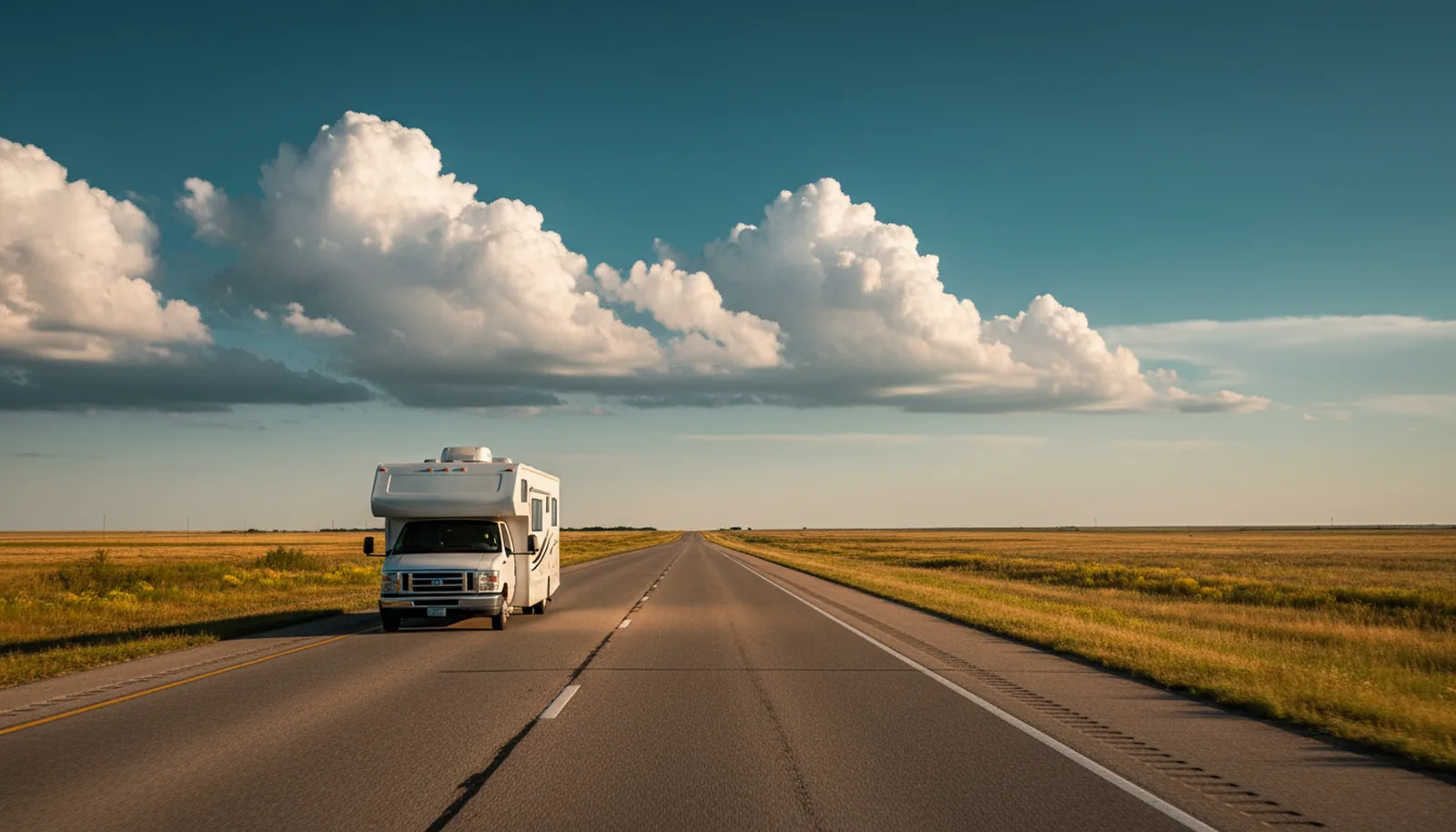
The summer we drove from Denver to Bar Harbor, Maine, I stayed up three nights comparing cross country RV rental options, starting with one-way RV rentals from Denver. Two kids, a dog, and a 3,000-mile route with no room for error, so I started with an RV rental in Denver search and built a spreadsheet. Columns for base rate, mileage fees, one-way drop fees, generator hours. I ran every camper van rental in Denver through it too, and most of the Class C RV rental in Denver options. The spreadsheet saved us. Just not at the start.
We booked a rig that looked like a steal until I added the drop fee. Seven hundred and fifty dollars. I made that mistake on our first motorhome rental in Denver. I said a word I don’t repeat in class.
That’s the whole game with a cross-country RV rental: total price, not nightly rate.
One-way vs round trip: the first fork in the road
A one-way rental lets you return the RV to a different city than where you picked it up, and it can save you a week of driving back over ground you’ve already seen.
I started comparing one-way RV rentals out of Denver, and the pattern jumped out in the first hour: drop fees off the coasts were lower, and cities with seasonal demand (Denver in early June) had more rigs going east. I also checked one-way RV rentals nationwide so I could see which companies even offered the route.
If a one-way fee tops $500, I run the round-trip math: what the extra fuel, extra nights, and extra campsites would cost to drive back. Usually it’s a clear answer. But the next decision mattered just as much: miles per day.
Miles per day: the number that saves or wrecks a trip
Our first day, I planned 450 miles, and it nearly ended the trip before it started.
A comfortable pace in a motorhome is 250 to 300 miles a day. That’s 5 to 7 hours with stops. Over 400 is a survival march, not a vacation. I now plan 250 as the default, 300 if the route is empty, and I will never, ever plan a 450-mile day again.
The real risk isn’t the schedule. It’s fatigue. After dark, on a mountain road you don’t know, in a rig that doesn’t stop or turn like your car, you are the hazard. We made a rule after that first day: wheels parked by 7 pm, full stop.
Mileage packages on a 3,000-mile trip: do the math first
Mileage packages only look boring until one of them costs you an extra $200 or saves you $300, and you won’t know which until you run the numbers.
Many rentals include a mileage allowance, often around 100 miles a night, but it varies by company and listing.
On our trip, the base rate with 100 miles a night came to $1,800 for 10 nights. The unlimited package was $1,135, but it only beat the base if we drove more than 2,700 miles. We ended up driving 2,980, so unlimited would have saved $40. But the bundle of 2,000 extra miles at $0.32 a mile cost $640, and that won for our trip.
Before you book, get the exact mileage allowance per night, the overage rate, and the price of any bundle. On long trips, one package usually beats paying per mile, but never automatically.
Fuel budgeting: the line item nobody wants to talk about
Fuel is the bill you pay all trip long, and on a 3,000-mile route it can cost more than the rental itself.
I budgeted fuel at 10 mpg for our Class C, which was within the typical range for that rig.
Diesel is a diffrent world. Some Class A rigs get single digits to low teens mpg, but the fuel costs more per gallon and the tanks are enormous. I don’t tow so I won’t pretend to know trailers, but a tow vehicle’s mileage drops 30 to 50 percent with a trailer behind it.
Before you leave, write down the mpg range for the exact rig you booked, divide your total miles by the low number, multiply by $4.00 a gallon (or whatever the price is that week), then add 10 percent for generator and idling. Ours was $1,200. I’d saved $1,400, so we ate out twice.
Campgrounds: the reservation game and the 9 pm save
A reserved campsite is less worry, but the best spot we found all trip was the one nobody had reserved.
I reserved every campsite on our route four months ahead.
On our third night we was supposed to stay near Cleveland. It cost $25, had 30-amp electric, and was empty except for a couple of deer. That’s the secret: the apps show nothing, but a phone call to a county or city park often finds a spot.
For a cross-country trip, I now reserve most nights and leave the rest open. I call ahead two days out, and I keep a list of no-reservation state parks and fairgrounds along the route. Makes the trip feel less like a cattle drive.
Drop-off city logistics: the last 50 miles matter
We chose to drop the RV in Portland, Maine, then rent a car for the final 180 miles to Bar Harbor. That was a mistake.
Airport drop-offs are easier for flights but often carry higher one-way fees. Add the car rental and the day of fuss, and the real cost of that “convenient” drop was $250 and 6 hours.
Before you book, map the drop location. Check if it’s near a hotel, a train station, or an airport shuttle. Ask the company for the exact adress and hours. The return window is often 8 to 11 a.m., and there may be a late fee, so don’t book a flight before 3 p.m.
The fatigue rule: drive like a teacher, not a hero
On our second day, I drove the last 90 miles after dark thru the Poconos because a flat tire ate two hours. Narrow shoulder, thick fog, and I gripped the wheel so hard my knuckles ached. We survived, but I’d never do it again. The kids slept. That made it worse: they were safer, and I was alone with the fatigue.
I now have a hard rule: no driving after dark on unfamiliar roads, especially mountain or forest routes. I plan evry day to end by 7 pm, and I plan a rest day every four days. A rest day sounds like a wasted vacation day. It’s the opposite. You sleep, you do laundry, you let the kids run, and you don’t unpack the RV. Then you drive the next stretch without white-knuckling it.
I also started carrying a printed map of the route, because cell service drops exactly where you need directions. And I put the campground’s phone number in my pocket, not just my phone. That little habit saved us on the worst night of the trip.
I found this beginner video helpful for planning our route.
What I’d tell a friend planning a cross country RV rental
Plan 250 miles a day, not 450. Get every fee in writing before you compare prices, because the nightly rate is a lie. And book the rig for the trip you will actually take, not the trip you hope to take. That’s why I point people to our post on small RV rental options before they size up.
If your starting in Denver, pull up class C RV rental in Denver and camper van rental in Denver and write down the real total cost for your dates. Then call two companies and ask for a written quote with every fee line by line. Do that before you fall in love with a picture of a rig in front of a mountain.
That’s the move. Not the website, not the reviews, not the Instagram photo. The quote. Get it, read it, then decide. And if the numbers don’t work, check motorhome rental in Denver and RV rental in Denver to see if a different type of rig changes the math. It usually does.
Before you book
FAQ
How much does a cross country RV rental cost for 3,000 miles?
Plan on $2,500 to $5,500 for 10 nights in a Class C, including base rate, miles, fuel, and fees. Our one-way trip cost about $4,860, but that's illustrative. Get a written quote with every fee before you book, because nightly rates never tell the full story.
Can I rent an RV one-way from Denver to the East Coast?
Yes, many major fleet companies allow one-way rentals between their depots, but fees range from abotu $200 to $750. Compare one-way RV rentals out of Denver before you assume it's available. Peer-to-peer owners rarely allow one-way because their RV has to come back.
How many miles a day should I plan in an RV?
Plan 250 to 300 miles a day. That's 5 to 7 hours of driving with stops. Over 400 miles is a survival march, not a vacation, and it's the fastest way to ruin a family trip. I learned that the hard way on a 450-mile day from Denver to North Platte.
What's the cheapest way to rent an RV for a 3,000-mile trip?
Compare total price, not nightly rate. A rig with a low nightly rate but a high per-mile charge can cost more then a rig with a higher nightly rate and unlimited miles. On our trip, a prepaid mileage bundle saved us money compared to paying per mile.
Do I need a special license to drive a rental RV?
Most rental motorhomes and trailers can be driven on a regular car license. But a handful of states require a special non-commercial license for very heavy or very long rigs, usually over 26,000 pounds or 40 feet. Check your state's DMV before you book.
Does my personal auto insurance cover a rental RV?
Usually not. Personal auto policies typically don't cover damage to a rented RV, and credit card rental coverage almost always excludes RVs. You'll need to buy the rental company's damage waiver or protection plan. Read the rental agreement before you decide.
Find RV rentals near you
Compare RV rental companies in your city, then ask a few for a quote on your dates.
Browse by stateOr jump to: Phoenix, AZ · Salt Lake City, UT · Miami, FL