Class A RV rental: driving a bus for a week, and what it really costs
By Teresa Ocampo · October 21, 2026
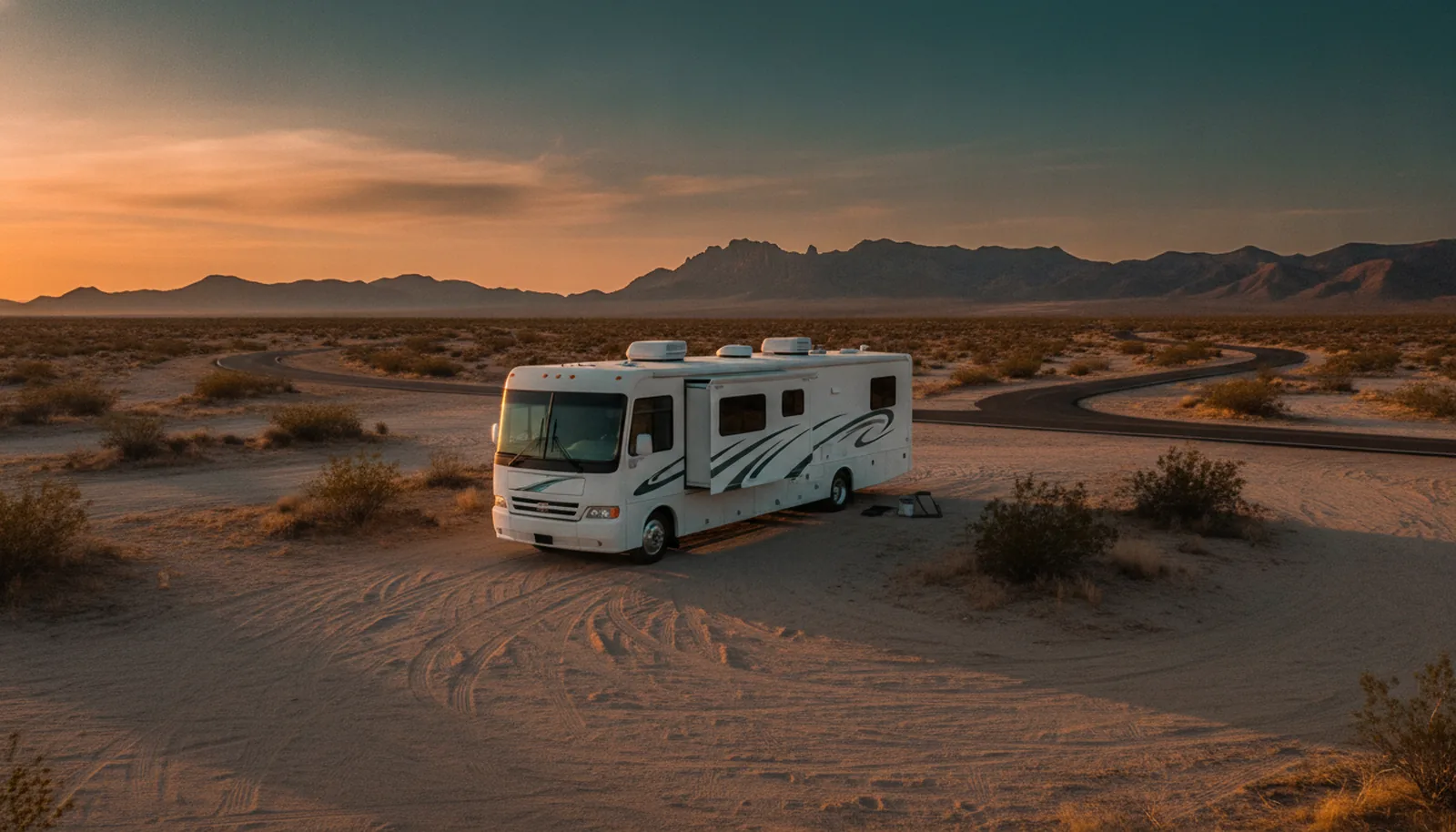
The first time I rented a Class A, I was 47 miles out of Las Vegas on I-15 heading north, and a gust off the Mesquite flats pushed me two feet toward the truck lane. I corrected, white-knuckled, and my co-driver says the thing nobody wants to hear: “You know the canopy at the Flying J back in Moapa had clearance for 12 feet 6 inches, right?” I hadn’t looked. (I still check motorhome rentals in Las Vegas every few months.) We cleared it by about five inches. That’s Class A life in one moment: more space than you need, more rig than you’re used to, and a few places that will not forgive you for skipping the little sign.
Nine years at a motorhome rental counter in Las Vegas taught me this: motorhome rentals in Las Vegas split renters into two groups. The ones who do a lap of the lot and the ones who don’t.
What a Class A RV rental is, gas vs diesel
A Class A is the bus-shaped rig you picture when someone says motorhome.
Gas Class A motorhomes often run $250 to $450 a night, depending on the company, season, and rig.
Diesel pushers often run $350 to $450 a night and climb from there, depending on the company, season, and rig. These usually have air brakes, a tag axle, better weight distribution, and enough torque to pull a car on a trailer. When the listing says “diesel pusher,” you’re renting the smoothest ride in the fleet, but you’ll pay for it at the pump and at the counter.
Every Class A I’ve rented or checked out at our depot had more exterior storage than any Class C. The pass-through basement compartments eat folding tables, coolers, camp chairs, and a kid’s bike with room to spare. Inside, ceiling height matters. Look at the floorplan. A 32-footer with dual opposing slides in the living area feels like a park model cabin. A 32-footer with no slides feels like a hallway. The slide count changes the weekend more than the length does.
Who rents a Class A, and why
Class A renters are almost never solo travelers.
The secound pattern: longer stays.
The third pattern: people who need the RV to double as a gathering place. I’ve checked out Class A units to tailgaters, to wedding groups, to a film crew that used the awning as a craft services tent. The awning on a Class A is bigger than the one on most Class C rigs, and the outdoor kitchen or outside TV on some units turns a campsite into a clubhouse.
If you’re renting a Class A becuase you think it’ll be easier to drive than a Class C, rethink that. It’s not. The longer wheelbase helps on the highway, but the tail swing, the height, and the turning radius are all more work.
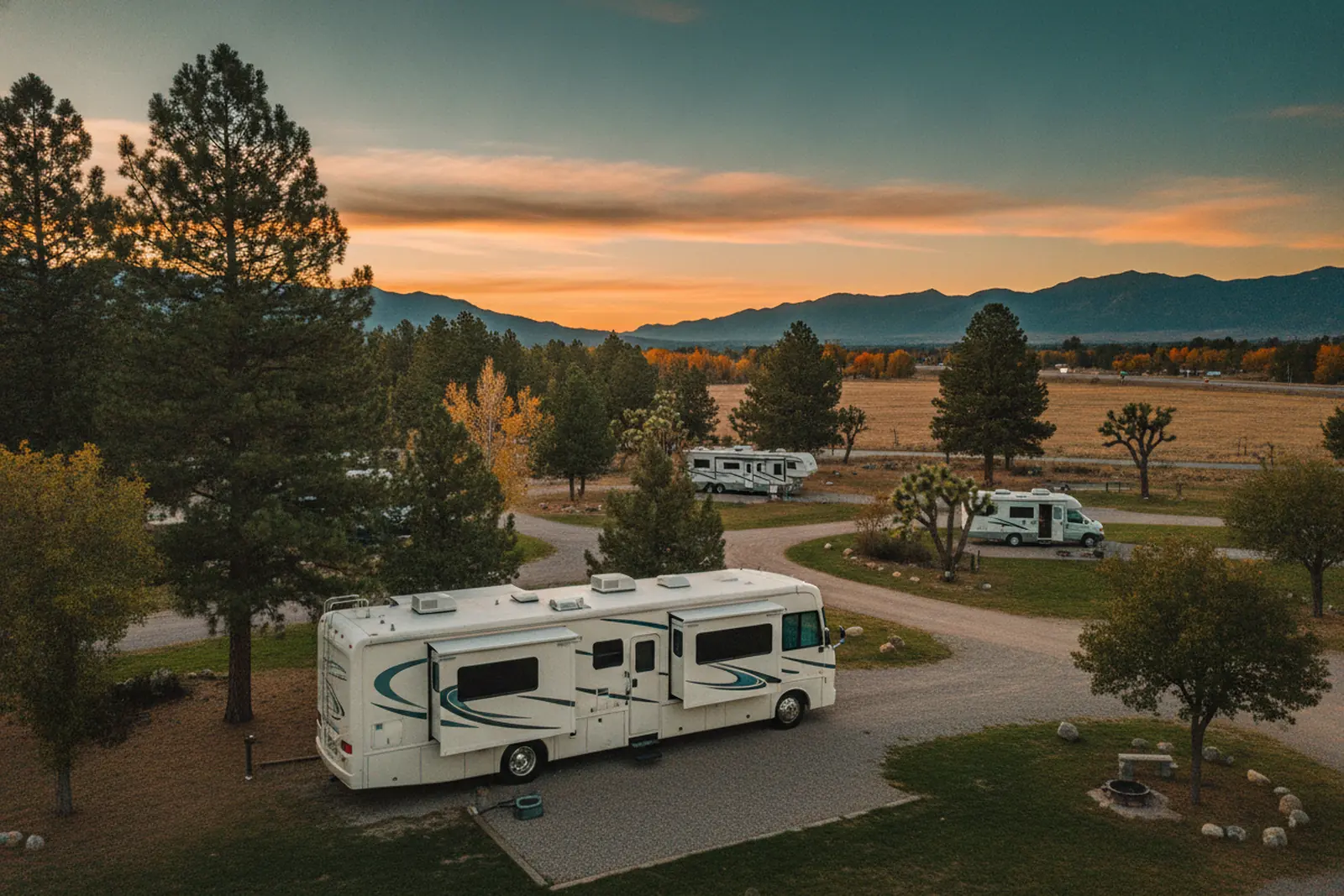
Driving a Class A: the realities nobody puts in the brochure
The first 30 minutes of any Class A rental are the worst.
Fuel stops. Truck stops are your friend. They have the high canopy lanes, the extra-wide turns, and the space to pull forward. At single digits to low teens for most motorhomes, you’ll be filling up often. Budget roughly $250 to $450 for fuel on a 700-mile week, depending on the rig and fuel prices. Diesel pushers may get a little better mileage, but the fuel costs about the same per mile.
Wind. The hardest driving I’ve ever done in a Class A was on US 95 between Las Vegas and Reno, with 30 mph crosswinds and a 40-foot diesel pusher. You have to drive ahead of the gusts. Slow down 10 mph. Don’t pass a truck when the wind is gusting; the wake from the truck plus the gust will shove you hard.

I learned a lot from this video on off-tracking and rear overhang, especially about watching the back end in tight turns.
What a Class A RV rental really costs: prices, fees, and the rest
The nightly rate is only the start.
| Item | Typical range | What to ask |
|---|---|---|
| Nightly rate (gas Class A) | $250 to $350 | Is there a lower weekly rate? |
| Nightly rate (diesel pusher) | $350 to $450+ | Is a diesel pusher the same price? |
| Per-mile fee | $0.35 to $0.50 after a daily allowance | How many miles are included per night? Can I buy an unlimited package? |
| Generator hours | $3 to $5 per hour after included hours | How many generator hours are included per night? |
| Kitchen and linen kits | $50 to $100 total | What’s actually in the kit? Can I bring my own? |
| Cleaning and dump fees | $50 to $150 cleaning, about $75 dump if you return it full | What counts as ‘clean’ at return? Where’s the dump station? |
| Security deposit | $500 to $1,500 hold on a credit card | When is it released? |
| Protection plan | $15 to $36 per day | What does the damage waiver cover, and what’s the deductible? |
Comparing against a Class C? Do the math on the same dates and the same miles. Our own price sheets put a comparable Class C about $80 to $120 a night cheaper, plus better fuel economy.
License, age, and driver rules for a Class A
One of the first questions at the counter is always about licenses.
Age is simpler. Big national fleets usualy want the main renter and all drivers to be at least 21. Under 25, you might get a reduced choice of protection plans; ask about any extra fees. Every driver has to be listed on the rental agreement. If your brother-in-law takes a turn at the wheel and isn’t on the paperwork, insurance doesn’t cover him, and the rental company will not be sympathetic.
The Class A walk-around: what to check before you leave the lot
At our depot, every first-time Class A renter does a lap of the lot with me.
Air brakes on a diesel pusher. Push the yellow knob in to release the parking brake. Pull it out, firmly, when parked. If the low-air buzzer goes off while you’re driving, pull over safely. The brakes work, but the air system runs everything else too.
Awnings. Wind is the killer. Awnings on Class A units are big, and a sudden gust can tear one off in seconds. The rental agreement will have a rule about when to retract it. Usually that rule is “if there’s any wind at all, retract it.” Don’t outthink it.
Booking and pickup: the questions that matter
When comparing Class A units, the listing shows you the same three numbers: nightly rate, length, number of people it sleeps.
- What is the exact height of this unit, written in feet and inches?
- How many miles are included per night, and what’s the per-mile fee after that?
- How many generator hours are included, and what’s the metered rate?
- Does this unit have a leveling system, and is it automatic or manual?
- How many slides does it have, and what’s the sequence checklist?
- What does the protection plan cover, and what’s the deductible if I hit a tree branch?
- What counts as “clean” at return, and is there a dump station at the return lot?
- Can I see the exact model’s floorplan, or just a “similar unit” photo?
If you’re picking up from a fleet operator, ask for a 30-minuite walkthrough with the person who does the returns.
And if you’re in Nevada or nearby, pull up RV rental companies across Nevada and ask two of them to quote the same dates and class in writing, every fee listed.
The test I’d tell you to run before you book
Here’s what I’d do, knowing what I know from the counter.
Then ask yourself one question: do I need the extra 8 feet, or do I need the extra $1,000? A Class C gets the same family to the same campsite, drinks less fuel, and fits in more places. If the answer is “we need the space,” book the Class A, do the walk-around, and drive the first day like you’re still on the lot.
And if you’re still figuring out whether a drivable motorhome is even the right style, read our close look on drivable vs towable RV rental.
Keep reading
FAQ
Do I need a special license to rent a Class A RV?
For most rental Class A motorhomes, a regular driver's license is all you need, but a few states require a non-commercial special license for very large coaches; check your state DMV. A few states require a non-commercial special license for very large coaches. Ask the rental company for the exact unit's weight and length before booking, then check your state DMV. Every driver must be listed on the rental agreement; minimum age is usually 21 at big fleets and often 25 with private owners.
How much does a Class A RV rental cost per week?
Plan on $250 to $450 per night for the rental itself, plus about $0.35 to $0.50 per mile after your daily allowance, generator hours at $3 to $5 per hour, and fees for kits, cleaning, and protection. All-in, a week in a gas Class A often runs $2,500 to $4,000 before fuel and campsites. Diesel pushers cost more per night but ride better and may include more amenities.
What's the difference between a gas and diesel Class A motorhome?
Gas Class A units have a truck engine up front between the front seats, are louder, and cost less to rent, typically $250 to $350 per night. Diesel pushers have a rear engine, air brakes, a smoother ride, and more towing power, and rent for $350 to $450 or more. For long highway trips or windy conditions, the diesel pusher is more comfortable. For a weekend, the gas unit is often the smarter price.
How hard is it to drive a Class A RV for the first time?
The first hour is the hardest. The rig is high, wide, and long, with tail swing you must account for in every turn. Wind and truck wakes are real concerns. Plan for shorter driving days, practice turning in an empty lot, and get out to check overhead clearances at gas stations and bridges. Most rental companies give you a thorough walk-around, and you should do a slow lap of the lot before you leave.
What is the fuel economy of a Class A motorhome?
Expect single digits to low teens for most motorhomes, depending on weight, wind, and speed. At current fuel prices, budget about $0.35 to $0.50 per mile for fuel. On a 700-mile week, that's roughly $250 to $450. Fuel is never included in the rental price and you return the tank at the same level you picked it up.
Does a Class A RV fit in all campgrounds?
No. Many state parks and national forest campgrounds have a maximum length of 30 feet or less. Private campgrounds usually have some long pull-through sites, but they book up early. Always check the maximum rig length for every campground you plan to use before you book the rental. The rental agreement will list the unit's exact length, including the ladder and hitch.
Is a Class A rental worth the extra cost over a Class C?
If you need the space, yes. A Class A gives you a separate bedroom, larger living area, more storage, and often a a bigger bathroom. Families of five or more, two couples traveling togther, or anyone renting for more than a week will feel the diffrence. If it's just two or three people for a long weekend, a Class C is cheaper, fits more campsites, and costs less in fuel. See our comparison of [luxury RV rental](/blog/luxury-rv-rental/) for more on what the extra money buys.
Find RV rentals near you
Compare RV rental companies in your city, then ask a few for a quote on your dates.
Browse by stateOr jump to: Class A RV rental · San Diego, CA · Tampa, FL · Denver, CO