Drivable RV rental vs towable: an honest review of both
By Owen Pritchard · October 21, 2026
What a drivable RV rental actually costs for a week
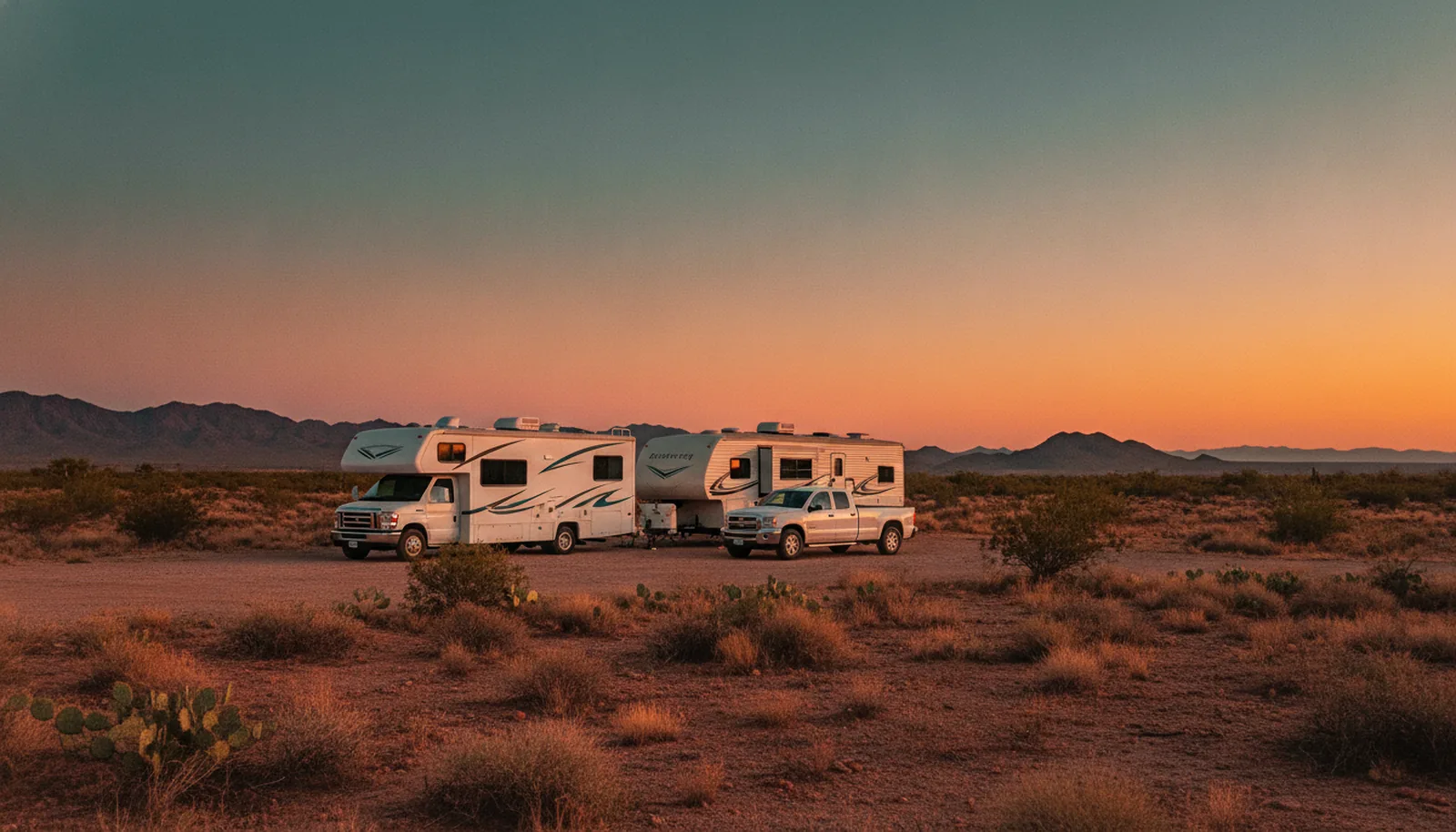
Okay, so the Class C I picked up in Denver for that July San Juan trip? Twenty-eight feet, and it set me back $1,920 before the first campsite reservation. The next summer my brother-in-law lent us his Silverado and we towed a 21-foot travel trailer for $740 all week. (I still poke around motorhome rentals in Austin every few months, old habits.) That gap, $1,180, paid for every tank of gas and four nights of pizza and the exact same view of the mountain.
The question with a drivable rental isn’t just the price tag. It’s what your willing to drive to the grocery store and parallel park at a trailhead and unhitch twice a day.
A drivable RV bundles the vehicle and the living space, and the bundle is not cheap. Class C motorhomes in my area run abotu $180 to $270 a night in July before mileage. Class A coaches average about $313 a night in the national index I keep in a spreadsheet, with fleet rates from $250 to $450. Add two drivers, a damage waiver, kitchen and linen kits, and 800 miles at 40 cents a mile, and a week in a Class C can land between $1,800 and $2,400, depending on the company and season.
Towables are a diffrent story. Travel trailers average about $113 a night, with fleet sites often listing $50 to $150, and our 21-footer was $740 for seven nights with zero mileage fee because my brother-in-law’s truck did all the work. If you don’t have a truck, delivery often runs about $1.50 to $4.50 a mile each way, plus a setup charge sometimes. Even then a delivered trailer usually beats a motorhome.
The line-item math matters more than the nightly rate. Which is where the real difference shows up: the driving.
The pain of driving the house, and the pain of towing it
Ive done both, and the stress just lands in different places.
The motorhome years taught me about tail swing. And about parking a house in a lot that was never meant for a house.
Towing a trailer is the opposite kind of work. The Silverado pulled our borrowed trailer fine for two hundred miles. Then I got to the site and spent twenty minutes backing in while my kids “helped” from the window. Unhitching, chocking, leveling side to side, hitching up again just to run for milk. I’ve timed the whole routine at twelve minutes on a good day.
For a first-timer, delivery removes the worst of both. The owner drops the trailer, levels it, hooks up sewer and electric, hands you the keys and drives off. You skip the white-knuckle part and still get the low nightly rate. Which is what the numbers below are for.
A side-by-side cost table for a week, July in the Rockies
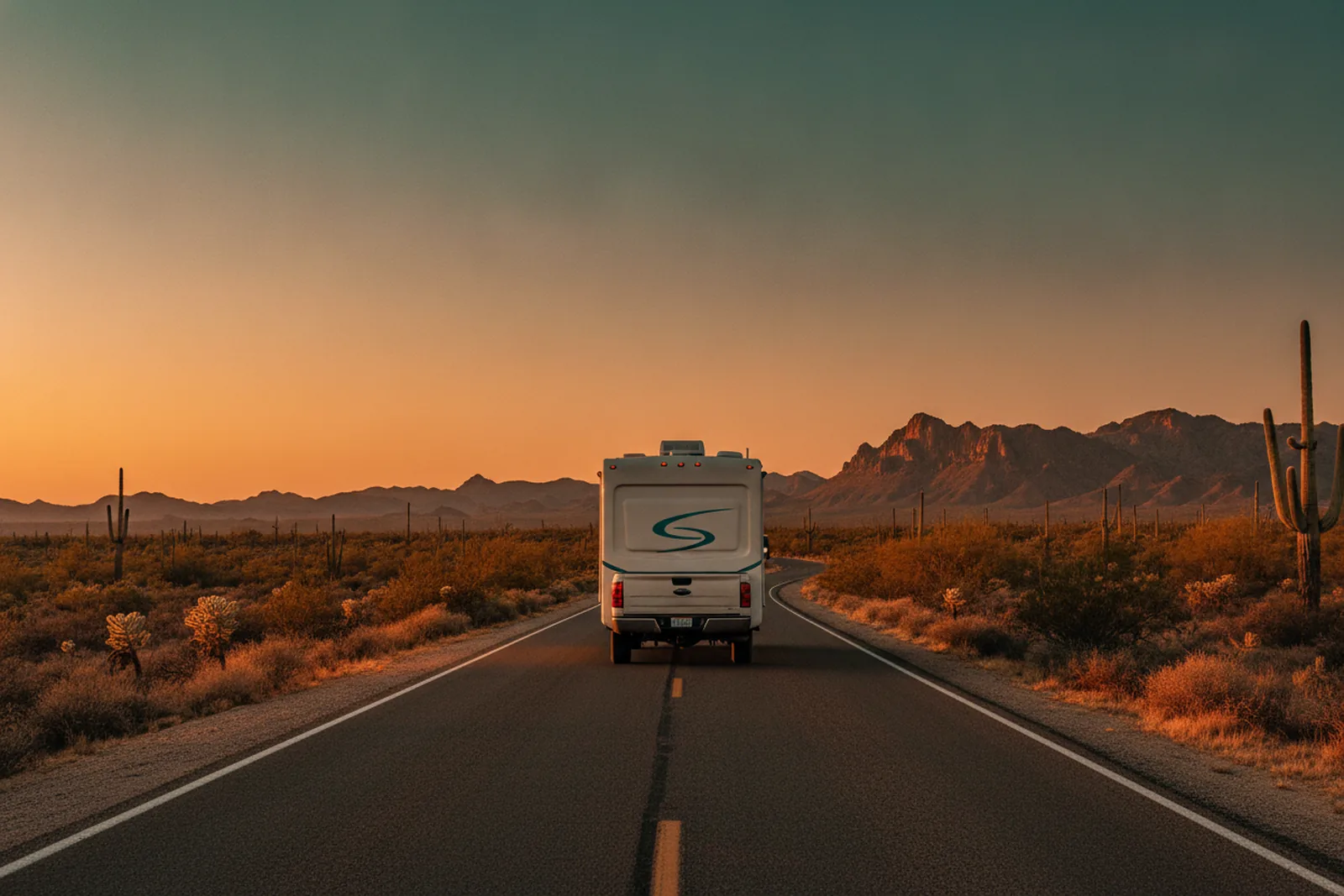
This is the table I put on the board when my students ask why I don’t just rent a motorhome every year.
| Item | Class C motorhome | Travel trailer (you tow) | Travel trailer (delivered) |
|---|---|---|---|
| Nightly rate | $214 (national avg) | $113 (national avg) | $113 (national avg) |
| Mileage | $0.40/mi, ~$320 for 800 mi | none (your truck) | none |
| Delivery/setup | none | none | $175-$300 round trip + setup |
| Tow vehicle | none | your truck (free) | none |
| Kit fees (kitchen + linens) | $100-$150 | $75-$125 | $75-$125 |
| Fuel (est. 10 mpg motorhome, 14 mpg truck+pull) | ~$280 | ~$200 | ~$200 |
| Damage/insurance add-ons | $15-$35/day | $10-$20/day (owner’s plan) | $10-$20/day |
| Total for 7 nights | $2,298-$2,838 | $1,346-$1,611 | $1,521-$1,886 |
These are averages, not promises. Peak season and big-city pickup lots push the motorhome totals higher. A borrowed truck and a simple owner listing can bring the trailer under a grand. But the table doesn’t tell you who can legally sit where.
Who rides where, and the law nobody tells you about
Our family of five solved it with a borrowed truck that seated five and a trailer that held all our gear. That’s the exception. Most tow vehicles seat five, which caps your party unless you rent a huge trailer and a huge SUV. If you need six or more belted seats, the eight person RV rental guide I wrote lays out which motorhomes and trailers actually give you that many legal seating positions.
License stuff: almost nobody needs a special license for a rental. A regular car license covers most rental motorhomes and travel trailers, but a few states have weight-based rules. California requires a noncommercial Class B with a housecar endorsement for a housecar over 40 feet, and a handful of other states have weight thresholds, so check your DMV before you book the big coach.
Seats and licenses sorted, the next question is what happens after you park.
Once you’re parked: side trips, small roads, and campground limits
The biggest lifestyle difference hit me on day three of each trip.
Small roads punish drivables. Glacier’s Going-to-the-Sun Road bans vehicles and combinations over 21 feet long or 8 feet wide between Avalanche Creek and Rising Sun, wich eliminates many drivable RV rentals. Trailer people drop the trailer at the campground and take the truck up Logan Pass. I check NPS length limits before booking a motorhome for any national park loop now.
Side trips matter more than peopel expect. With the trailer, we just leave. That freedom is worth a couple hundred bucks to me, and it’s the main reason my pop-up stays in the driveway while rentals fill the gaps. So which one should a first-timer pick?
Which rental is easier for a first-timer?
A delivered travel trailer is the easiest first RV trip in America, and I’ll die on that hill.
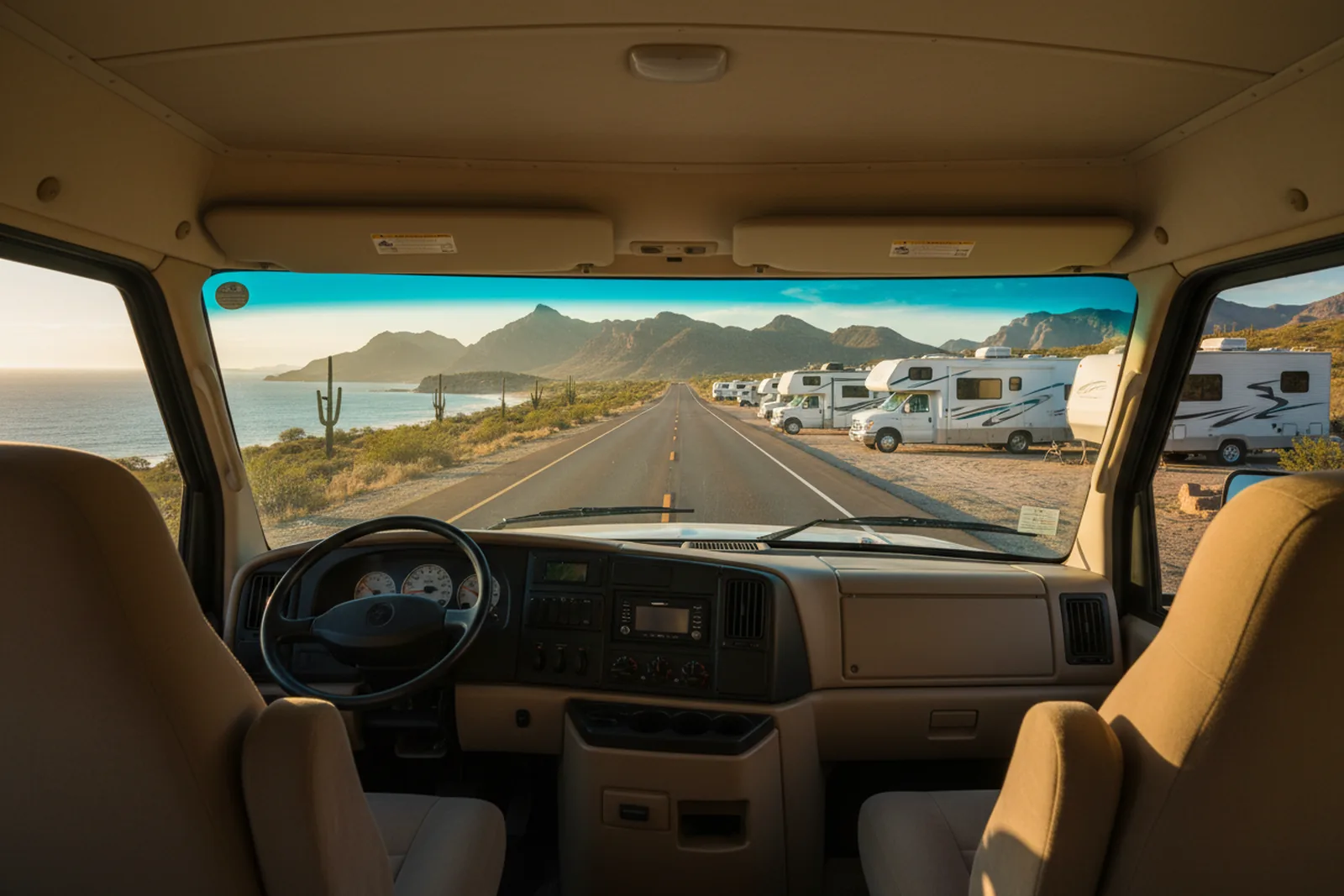
A drivable rental is easier in one sense only: everything is in one box and you never stand at a rental counter for a tow vehicle you don’t own. For a couple or a small family okay with driving a large van, a Class C is fine the first time out. For a family trying to keep the total under a grand, a delivered trailer or a borrowed-truck trailer is the answer.
My kids voted after the trailer year. The trailer won on every other count: cheaper, quieter, better in town. Try a delivered trailer before buying or renting a motorhome. But whichever you pick, read the contract like it owes you money.
I found this comparison from someone who has owned both a motorhome and a travel trailer, and it matches my experience.
Rental agreements and insurance: the fine print that changes everything
I’ve signed rental agreements from three big fleets and a dozen private owners.
Insurance is where my credit card failed me. Personal auto policies usually don’t extend to a rented motorhome, and most card benefit guides exclude RVs, so read your policy and benefit guide. Peer-to-peer platforms may arrange rental-period coverage with liability up to seven figures and physical damage up to $300,000, but you pick a protection package with a deductible that can range from $1,000 to $4,000. Damage waivers are not insurance. They’re a promise not to charge you for covered damage.
Before you book, ask for a written quote that includes per-mile fees, generator allowance and rate, cleaning or dump charges, kit costs, security deposit hold, and the exact deductible on the protection plan. I’ve saved hundreds by spotting a 50-cent per-mile overage before pickup, not after. And that is exactly the kind of thing my $400 test catches.
The $400 test I run before every rental
Two summers ago I almost booked a Class C for a Yellowstone loop. Then I called a local trailer owner and asked him to deliver to a campground outside Gardiner. The delivered trailer came to $1,380 for the week. The motorhome quote was $1,790 befor fuel. I pocketed the difference and bought my kids a two-hour horseback ride in the park.
That $400 gap is the real question. A drivable rental is wonderful, but it costs more money and costs more freedom once you park.
Before you book, run this test. Pull up motorhome rental companies in your city and ask two of them for a written quote on the same seven nights, every fee spelled out. Then find two travel trailer rental owners in you’re state and ask for the same quote, one with delivery and setup included. Compare only the total line.
The cheapest trip I’ve ever taken was the summer we borrowed a truck, rented a trailer, and spent the difference on the stuff the kids actually remember. The motorhome years were grand. But the trailer taught me what a rental should cost.
Next stop on the map
FAQ
Is it cheaper to rent a drivable motorhome or a towable travel trailer?
Travel trailers are almost always cheaper to rent, averaging about $113 a night versus $214 for a Class C and $313 for a Class A. If you already own a suitable tow vehicle, you skip the $0.35 to $0.50 per mile fee entirely. Delivered trailers cost more in delivery fees but still often beat motorhomes.
Can I tow a rental travel trailer with my SUV or half-ton truck?
Only if your vehicle's tow rating, payload rating, and hitch class cover the trailer's loaded weight. You'll typically need a brake controller. Many half-ton trucks can handle trailers up to 5,000 to 7,000 pounds, but check the door sticker and owner's manual before booking. Never exceed the manufacturer's limits.
Do I need a special driver's license to rent a drivable RV?
Usually no. A standard driver's license covers most rental motorhomes and travel trailers under 26,000 pounds. A few states, like California, require a noncommercial endorsement for motorhomes over 40 feet. Check your state DMV website before booking a large Class A coach.
Do I have to pay for miles on a motorhome rental?
Most drivable RV rental companies charge around $0.35 to $0.50 per mile after a daily allowance, often 100 miles per night. Some offer unlimited mile packages for long trips. Trailers you tow yourself don't accrue mileage fees. Delivered trailers may charge by the mile for delivery.
How much does it cost to have a rental trailer delivered and set up?
Delivery runs about $1.50 to $4.50 per mile, often with a minimum, plus a setup fee. A typical 50-mile round trip costs $150 to $300. The owner levels the trailer, hooks up sewer, electric, and water,and walks you through the systems. You never have to tow anything.
Are passengers allowed to ride in a towed travel trailer?
No. It is illegal in most states for anyone to ride in a towed travel trailer, fifth wheel, or toy hauler while it is moving, and your rental agreement will likely state this explicitly. Everyone must ride buckled in the tow vehicle. Motorhomes allow belted passengers in forward-facing seats only.
What insurance do I need when renting a drivable RV?
Your personal auto policy usualy doesn't cover a rented motorhome, and credit card rental benefits typically exclude RVs. Rental companies and peer-to-peer platforms sell protection plans with liability and physical damage coverage, with deductibles from $1,000 to $4,000. Read the plan before you book.
Find RV rentals near you
Compare RV rental companies in your city, then ask a few for a quote on your dates.
Browse by stateOr jump to: Honolulu, HI · Oklahoma City, OK · Tucson, AZ