RV Trailer Rental: Towing It Yourself vs Delivery
By Bryce Nakamura · October 21, 2026
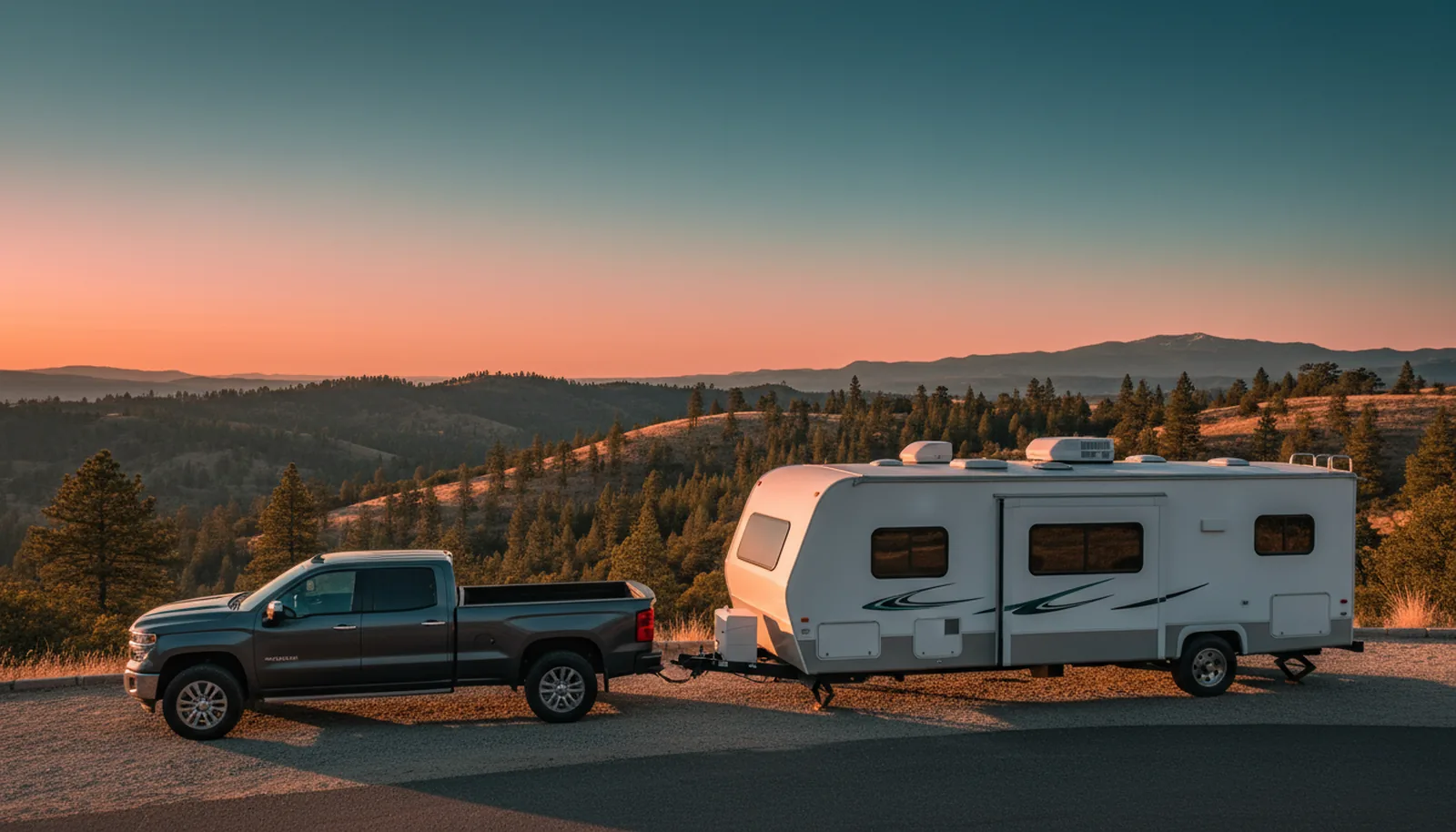
Last June I rented a 24-foot travel trailer from a guy in Hood River for a festival weekend in Troutdale, same kind of deal you’d find with travel trailer rentals in Sacramento. My pickup was rated to pull it, on paper. The wind tunnel through the Gorge said otherwise. I white-knuckled it at 45 mph while semis pushed past me, the trailer wagging just enough to remind me that a tow rating is a number, not a promise. The whole weekend cost me $412, not the $140 I’d budgeted, because I paid a delivery service to bring it back after the wind got cranky.
That night taught me the real fork in the road with an RV trailer rental: you either tow it yourself or you pay someone to deliver it and set it up.
Why trailer rental prices beat motorhome rates every time
Trailers are the cheapest way to sleep in a hard-sided RV. Last time I ran a cross-country price check, travel trailers averaged about $113 a night while Class C motorhomes ran $214 and Class B camper vans $228, and our post on Class A RV rental shows what the big rigs really cost. The 24-footer I rented for that festival had a base rate of $85 a night with a three-night minimum.
But the nightly rate is only the starting line.
Don’t compare trailer prices to motorhome prices without adding your tow vehicle cost.
If you’re comparing options across the country, pull up travel trailer rentals nationwide and filter for delivery or tow-ready units befor you get attached to a cheap nightly number.
The two ways to rent a travel trailer
There are exactly two paths: tow it yourself, or have it delivered and set up at your campsite.
- Tow it yourself: You bring a truck or full-size SUV with enough tow rating, payload, and hitch. The trailer is usually cheaper per night, but you’re on the hook for fuel, a brake controller, extended mirrors, and the stress of driving something that wants to wag.
- Delivered and set up: The owner tows it in, levels it, connects the hookups, and comes back at checkout. Delivery fees typically run $1.50 to $4.50 per mile, often with a minimum. Setups can add $50 to $175. For a campsite 50 miles away, budget $150 to $300 each way.
I’ll never forget a couple from Seattle who paid $320 in delivery fees for a $75-a-night trailer.
Compare delivery quotes from two or three owners before booking.
What your tow vehicle really needs: tow rating, payload, brake controller, mirrors
This is where I see renters make the most expensive mistakes.
Trailer brake requirements vary by state, and the weight threshold differs, so check your state’s rules before you tow. A brake controller is a small box under the dash that sends braking signal to the trailer; without it, the trailer’s brakes won’t engage when you hit the pedal. I always ask renters to prove their brake controller works before I hand over the keys.
Extended towing mirrors are not optional on a full-width trailer. You need to see down the sides to change lanes and back up. Some owners include clip-on mirrors; some charge a $20 rental. Ask before you show up.
If you’re new to towing, my honest advice: rent a trailer under 20 feet and under 4,000 pounds GVWR for your first trip. The Gorge taught me that wind and semis are a whole different game, even with a truck rated for double that.
The trailer walk-through owners actually do before you leave
No owner hands over a trailer without checking your rig and your experience. They’ll look for:
- Tow rating and payload on your door sticker
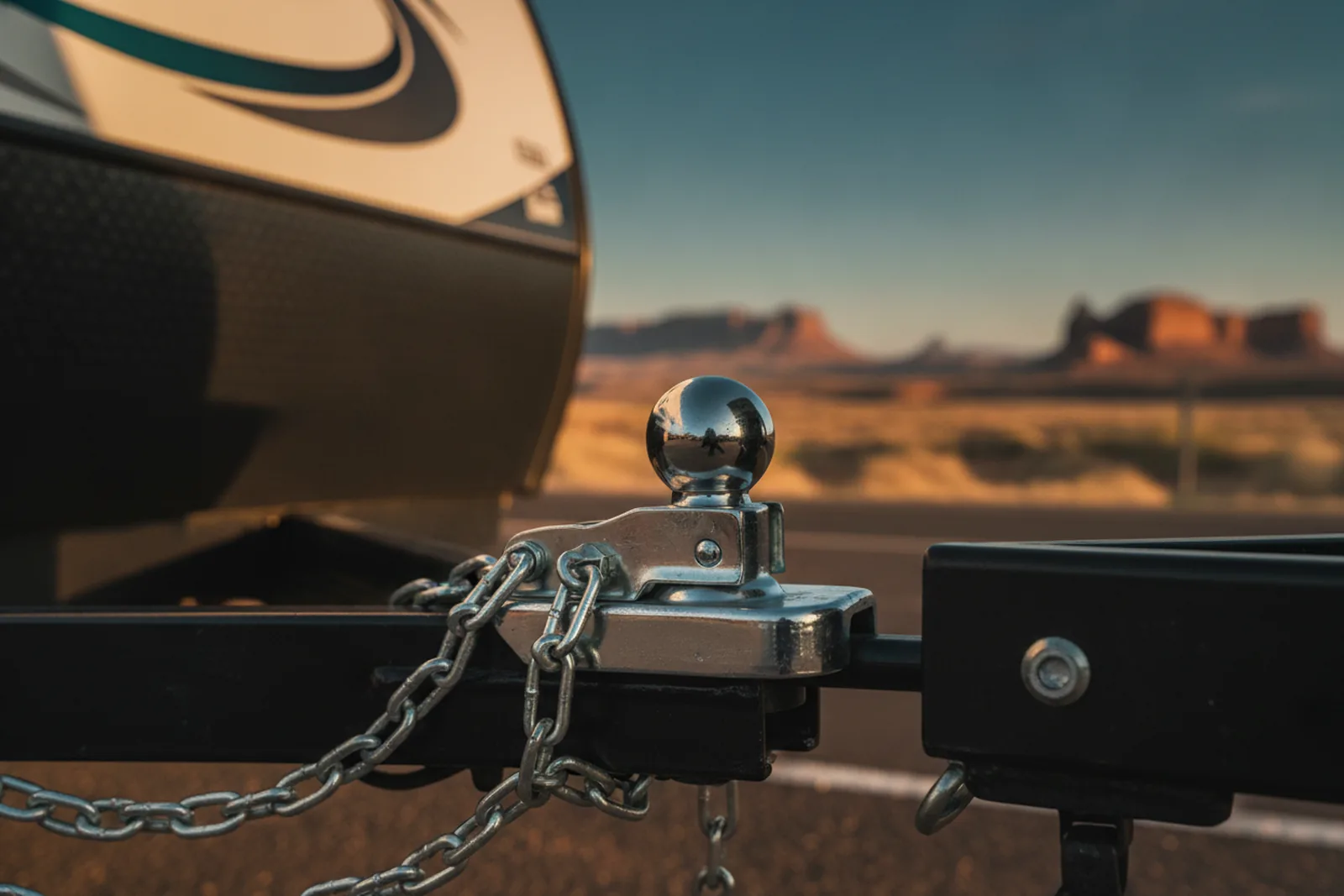
- Hitch class (most trailers need a Class III or IV receiver, 2-inch or 2 5/16-inch ball)
- Working trailer lights (brake, turn, running)
- A brake controller that actually engages the trailer brakes
- Trailer tires with good tread and no cracks, and proper air pressure
Then they’ll walk you through the trailer itself: how to hitch and unhitch, level it with blocks or a jack, extend the slide, run the fridge on propane, and dump the tanks.
I once refused a rental to a guy who showed up with a unibody crossover and a bolt-on hitch from a big-box store.
Backing up and setting up camp: the 20-minute learning curve
Backing a trailer is the skill that separates a relaxing weekend from a shouting match in a campground loop.
- Find an empty parking lot with painted lines.
- Put your hand at the bottom of the steering wheel.
- To make the trailer go left, move your hand left. To go right, move your hand right.
- Use tiny corrections. Oversteering is the top mistake.
- If the trailer starts to jackknife, pull forward and reset.
Practice for 20 minutes before you leave the rental lot.
Campsite setup is less dramatic but just as important:
- Level the trailer side to side with blocks or ramps before unhitching.
- Chock the wheels.
- Lower the tongue jack, unhitch, then level front to back.
- Connect shore power or run the fridge on propane.
- Only extend the slide-out after you’re level and chocked.
If the owner offers delivery and setup for a reasonable fee, take it for your first trip.

This tutorial from Camping World really helped me understand the basics of safe towing.
Insurance for a towable: two separate questions
Renting a trailer splits your insurance into two buckets:
- Damage to the trailer: Your personal auto policy usually won’t cover damage to a rented trailer, but check your policy to be sure. You’ll buy a protection package or damage waiver from the owner or platform. Deductibles on peer-to-peer rentals can run from about $1,000 to $4,000 depending on the platform and package you choose. Read what’s excluded. Common exclusions offen include an awning left out in a storm, driving with a slide-out extended, tire blowout from underinflation, and water damage from a leak you should of caught, but read your specific policy.
- Liability while towing: Your own auto insurance may extend liability coverage to a rented trailer while it’s attached to your vehicle, but policies differ, so call your insurer. But if the trailer comes unhitched and hits someone, some policies argue about it. Call your insurer before you rent. Ask one question: “If I rent a travel trailer and it damages another car, does my liability cover it?”
Ask the owner to send you the protection document before you put down a deposit.
What a delivered trailer actually costs: my rule of thumb
Delivery fees are the most under-budgeted line item in trailer rentals.
| Fee type | Typical range | Notes |
|---|---|---|
| Mileage | $1.50 to $4.50 per mile | Often one-way or round-trip; read the listing |
| Setup | $50 to $175 | Leveling, hookups, awning, often flat |
| Minimum fee | $75 to $150 | Applies for short distances |
| Dump fee | $0 to $75 | Some owners include tank dumping at pickup |
| Security deposit | $500 to $1,500 | Held on card, refunded after inspection |
That’s $200 to $400 for delivery alone, before you pay the nightly rate.
My rule of thumb: if the round-trip delivery distance is under 30 miles, delivery is often worth it.
Most renters miss this: delivered trailers are often owned by peopel who don’t want you towing them. For a week-long stay, a $300 delivery fee adds about $43 a night. For a weekend, it adds $100 a night.
If you’re considering a smaller van instead of a trailer, our breakdown of Class B RV rental walks through the solo or couple travel math.
The tow rating isn’t a permission slip
After the Gorge trip, I made a rule for evry renter who wants to tow one of my trailers: show me the door sticker, not the brochure.
It’s the pass, the crosswind, and the panic stop that test the whole setup. If you’re close to your maximum tow rating, you’ll feel it, especially in wind or on hills. And if you’re over your payload, you wont just feel it; you’ll be overloading your truck, wich is unsafe and can cause damage.
Next step: pull up three trailer rental options in your area. Ask each owner two written questions: “What is the trailer’s GVWR and tongue weight?” and “What is your delivery fee to my campground for my dates, including setup and any minimum?” One of them will give you the straightest answer, and that’s the one to book. The other two will teach you what hidden fees look like in sentence form.
Keep reading
FAQ
What should I check on my tow vehicle before renting a travel trailer?
Check the door sticker for max payload and tow rating, confirm your hitch class matches the trailer, verify brake controller function, and make sure you have extended mirrors. If you're near your payload limit, your truck will struggle, especially in wind. Ask the owner to confirm your setup before you commit.
How do I know if I need a weight distribution hitch?
Most trailers over 5,000 lbs or with a heavy tongue weight need a weight distribution hitch to level the rig. It reduces sway and improves braking. Ask the owner if the trailer requires one and if it's included. If not, budget $200 to $500 to add it, plus installation unless you're handy.
Can I rent a travel trailer if my truck has a bumper-mounted hitch ball?
Maybe, but it depends on the trailer's tongue weight and your bumper's rating. Many bumper hitches max out at 500 lbs tongue weight, which rules out most travel trailers. If the owner requires a Class III or IV receiver, you need a frame-mounted hitch. Don't guess; show the owner a photo.
What's the biggest mistake first-time trailer renters make with campground reservations?
Booking a site that's too short or has no room for the length with the tow vehicle. Measure total length of trailer plus truck, and confirm amp service for the RV's power needs. Some sites are back-in only and nearly impossible for a 30-footer. Call the campground and ask for a pull-through site if you're new to backing up.
How does the security deposit work for a travel trailer rental?
The owner places a hold on your credit card for the deposit amount, usually $500 to $1,500. It's not charged unless there's damage or a major cleaning issue. After the return inspection, if all is good, the hold is released within a few business days. Ask the owner exactly when release happens and what would cause a deduction.
What should I photograph at pick-up and drop-off of a rented trailer?
Photograph every side of the exterior, the roof, hitch, tires, awnings, slides, interior walls, floors, and tanks. Include the owner in a few shots if possible. At drop-off, take the same set with timestamps. This avoids disputes about pre-existing damage. Ask the owner to sign a damage checklist at both ends if you can.
Can I tow a rented travel trailer with a rental truck or SUV?
Most rental truck companies prohibit towing their vehicles unless they specifically offer a tow package, and many forbid towing any trailer. Read the rental contract's towing clause. If you need a tow vehicle, look for a truck-sharing service that allows towing, or rent a truck from a company that permits it. Always get written permission.
Find RV rentals near you
Compare RV rental companies in your city, then ask a few for a quote on your dates.
Browse by stateOr jump to: Travel trailer rental · Anchorage, AK · Las Vegas, NV · Phoenix, AZ